Samudra Manthan
Plastic never dies. That is the whole poison. A silent claymation about selling immortality to a thirsty country.
Frames
-
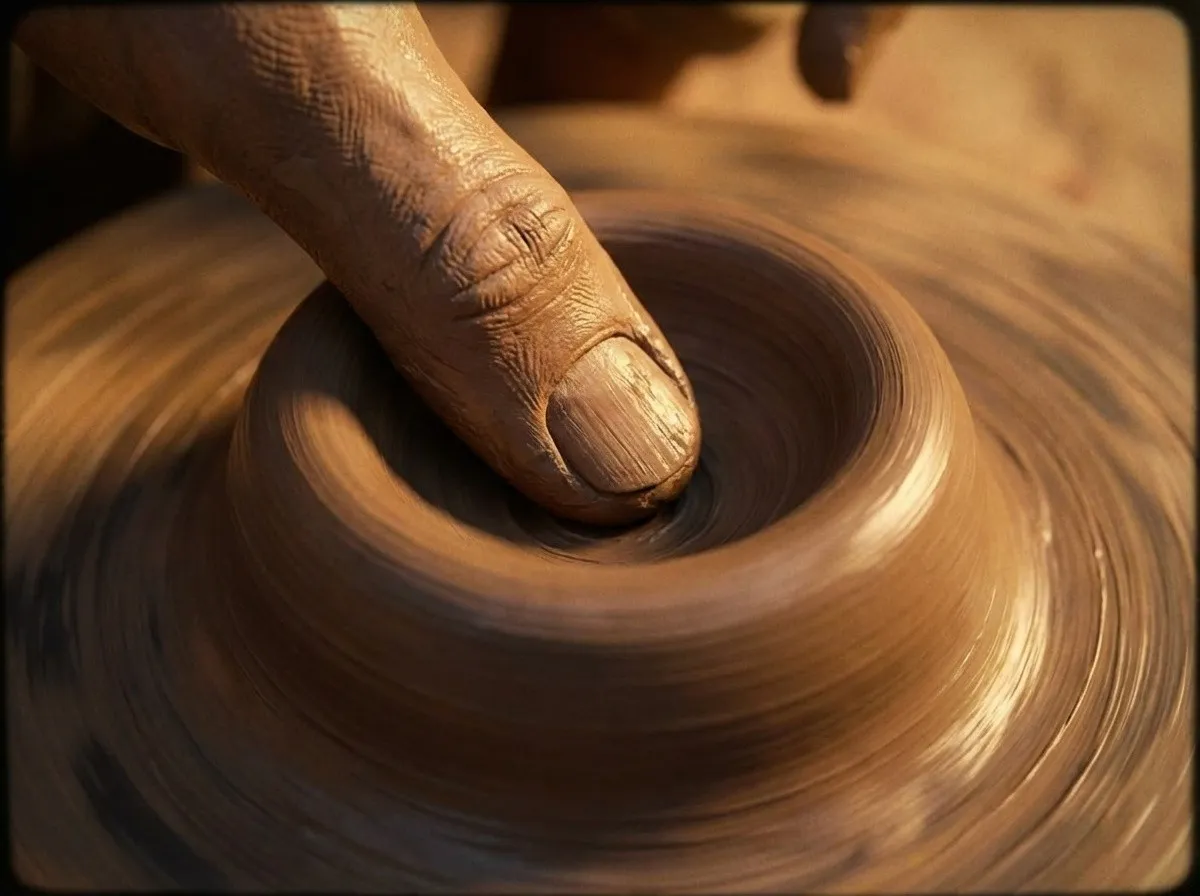
The potter's wheel: the spiral that carries the whole story. -
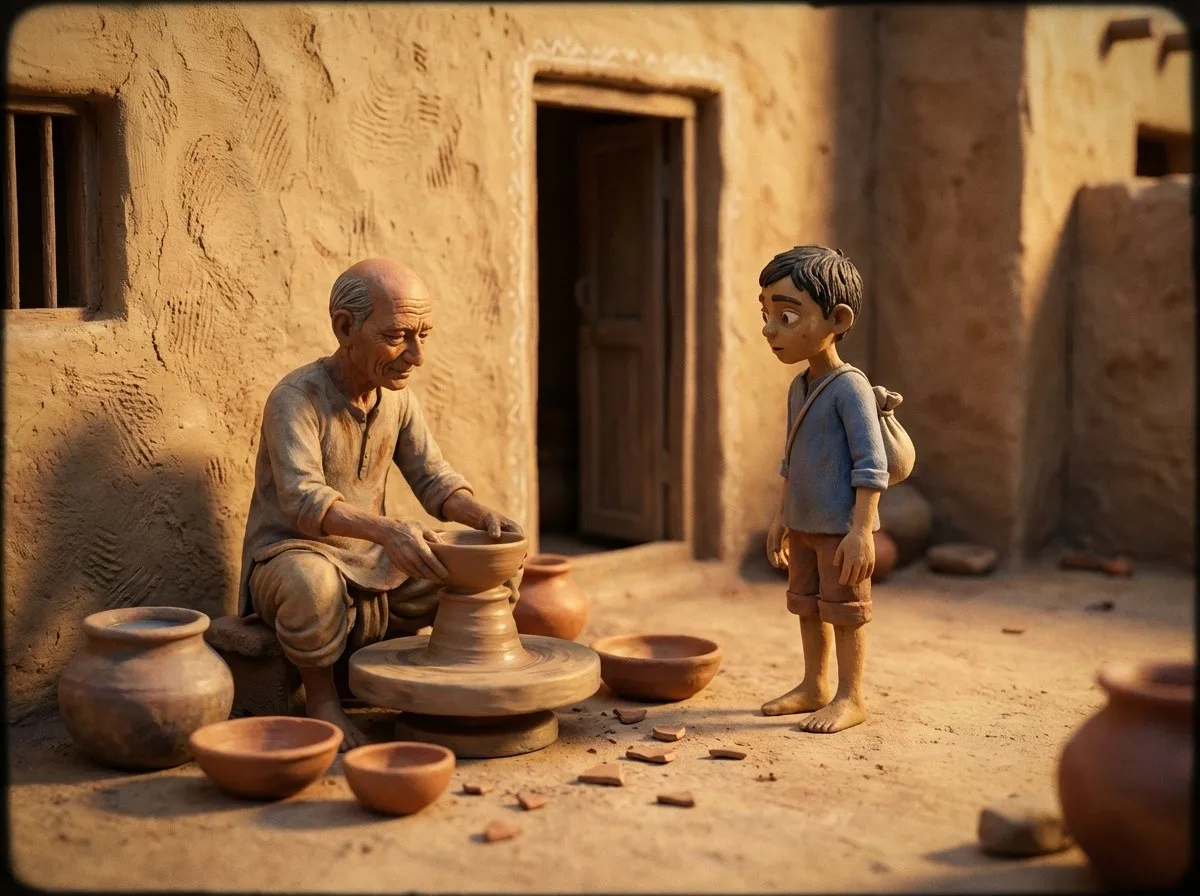
A potter's son, learning clay from his father. -
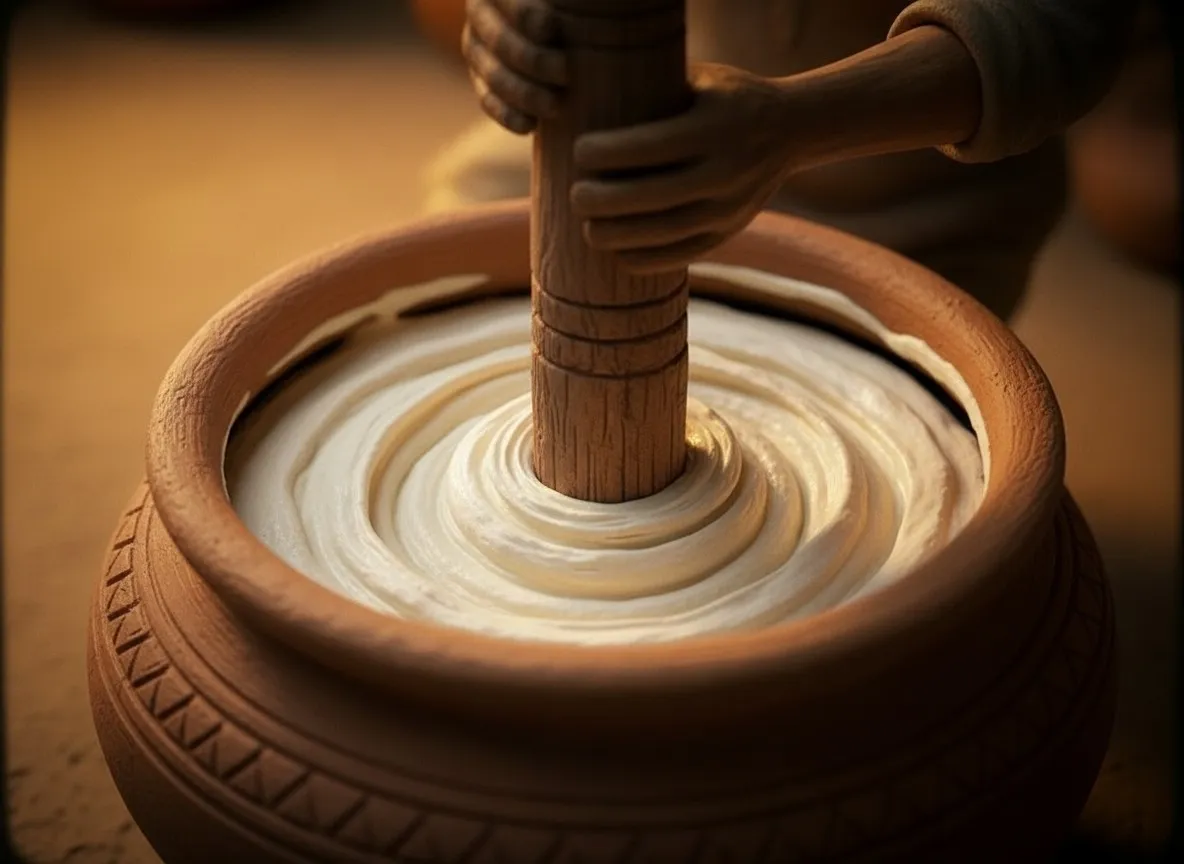
Curd churned with a wooden rod. He will repeat the churning, years later, with a metal one. -
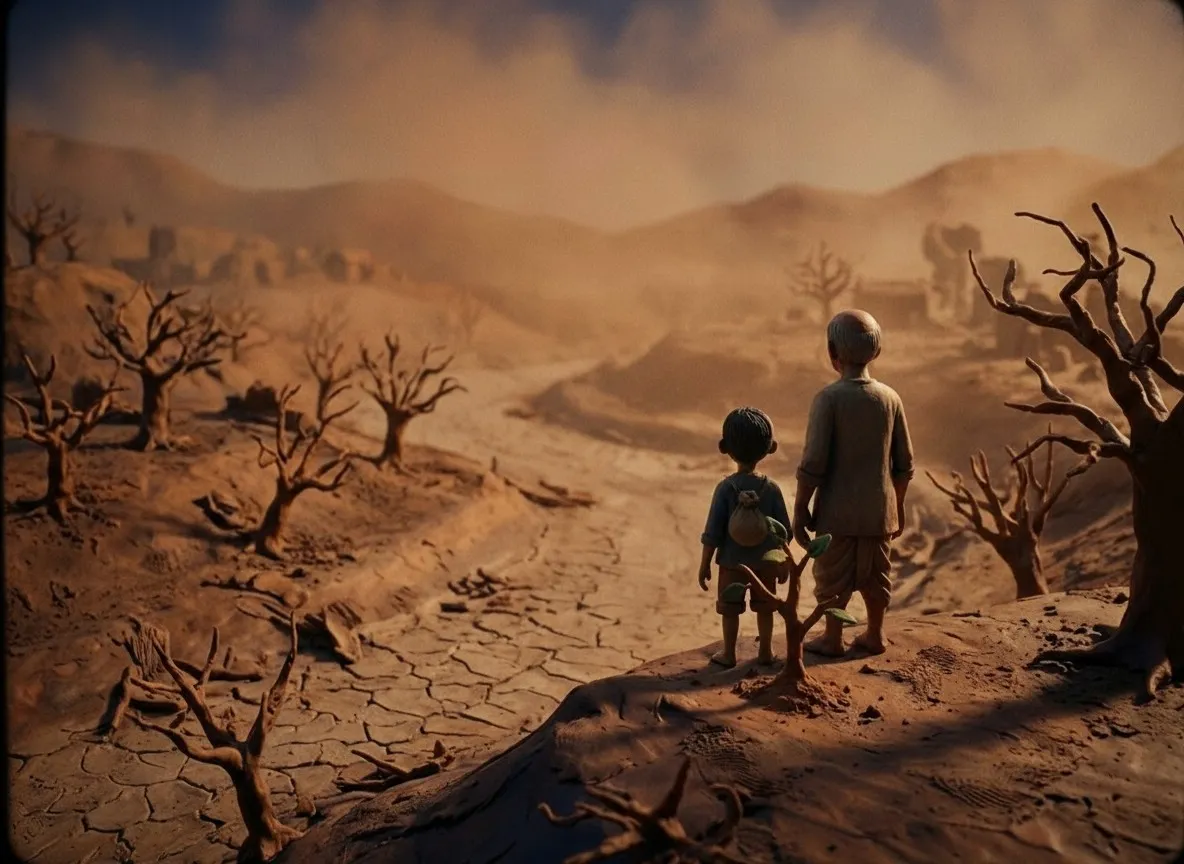
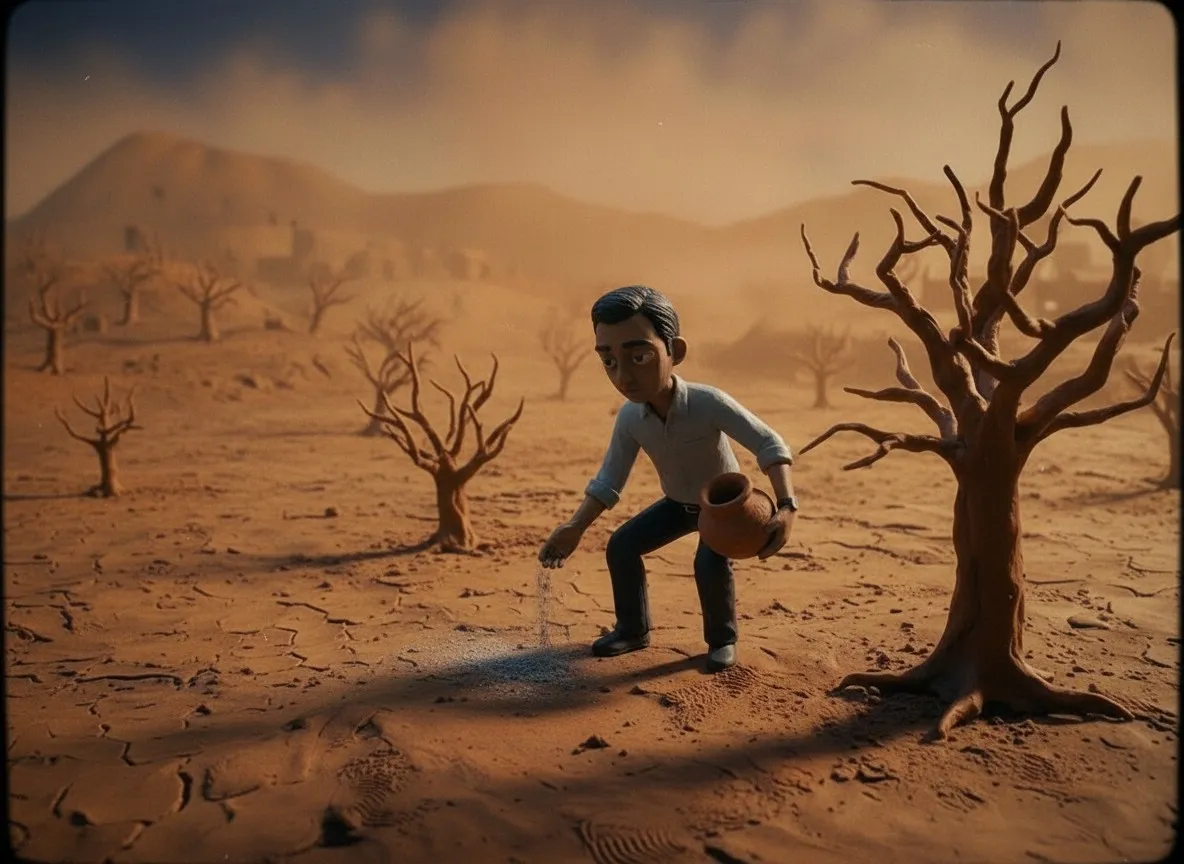
Beside a river that is quietly drying. -
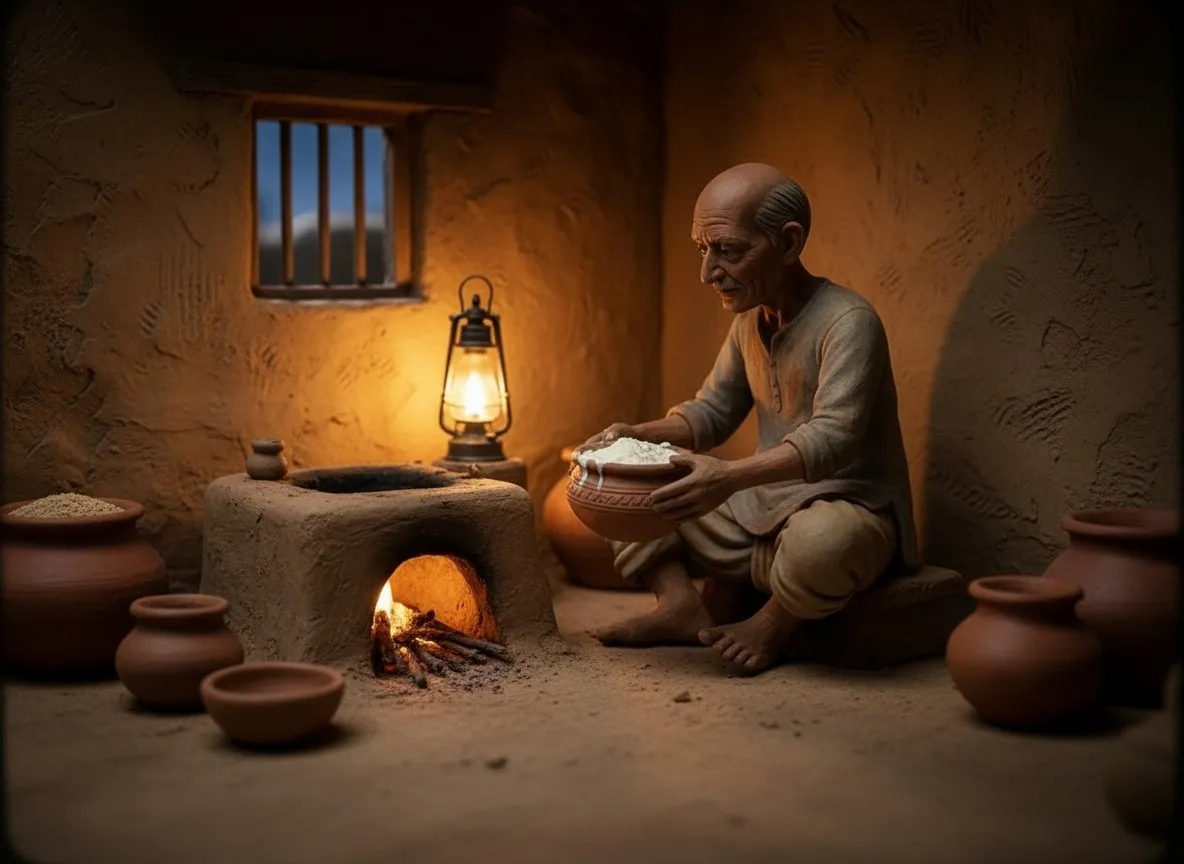
-
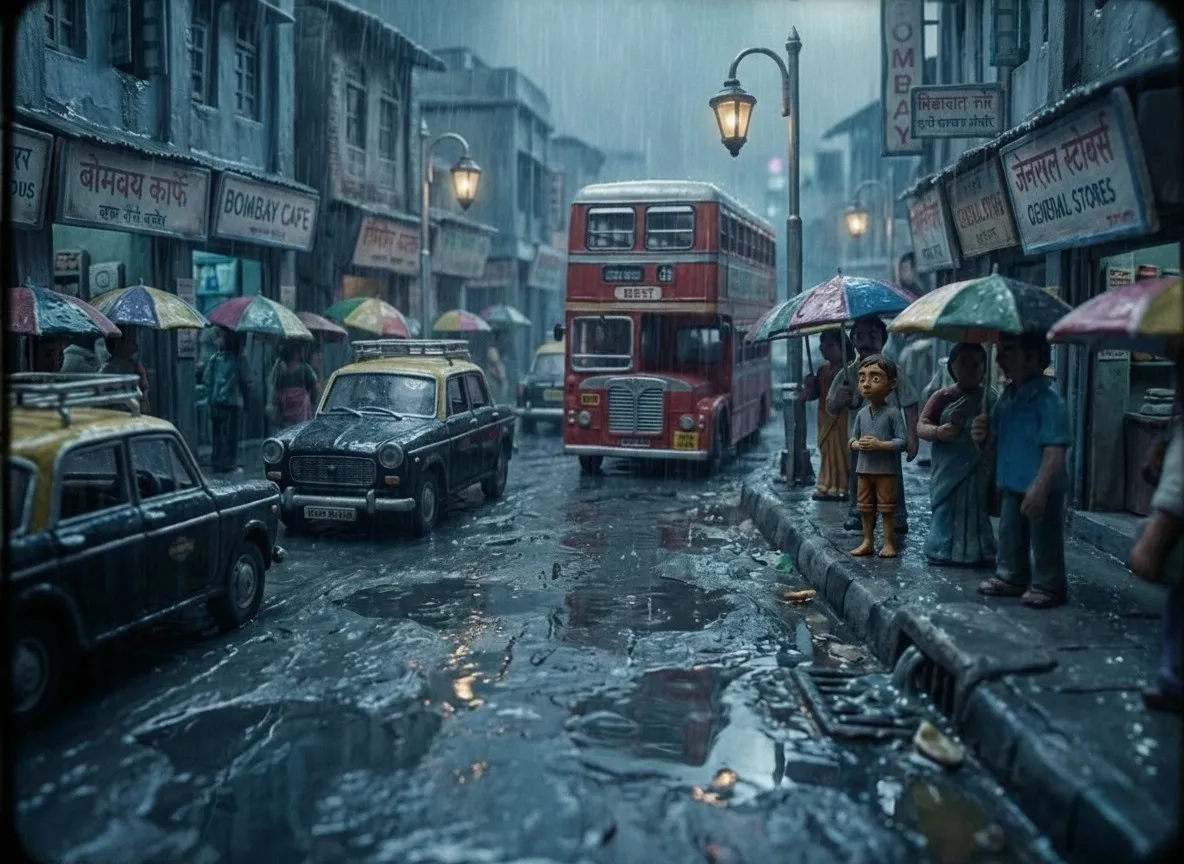
Bombay, mid-1980s, in the monsoon. -
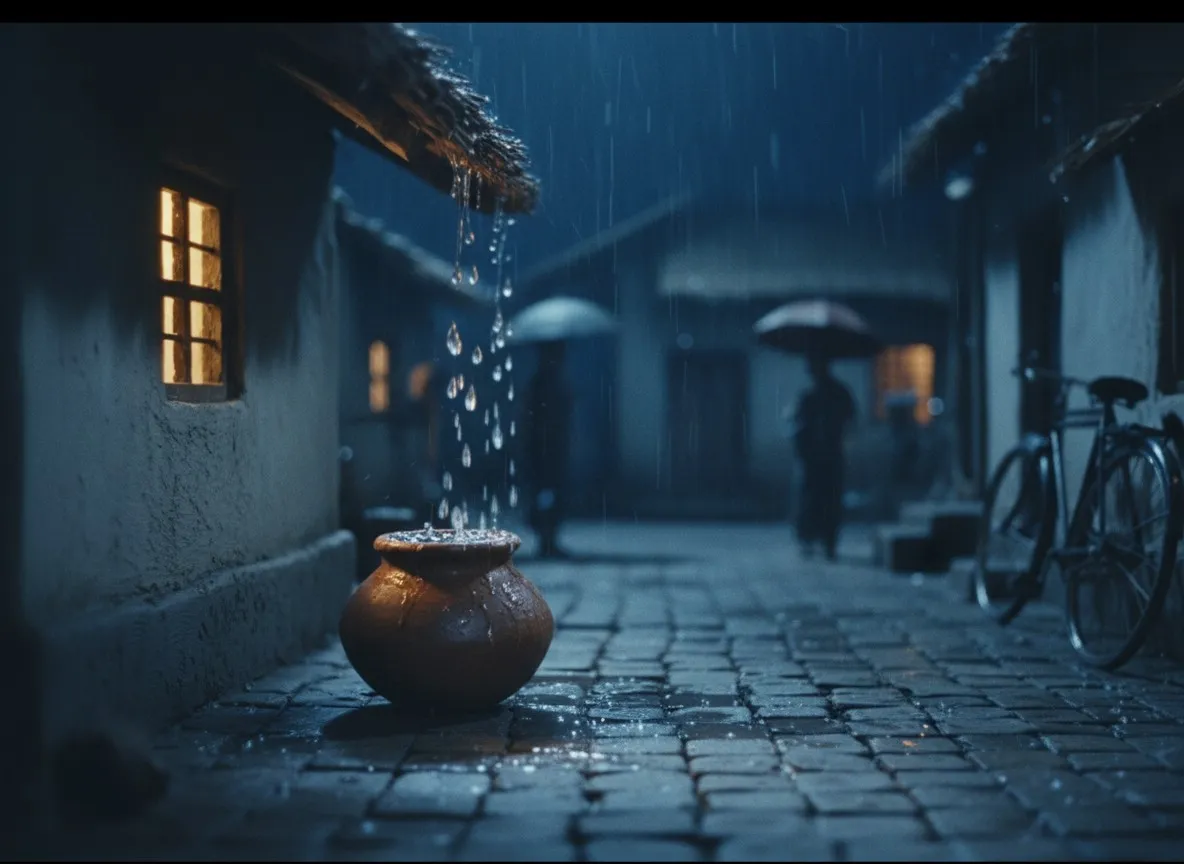
He discovers he can catch the monsoon in earthen pots, and sell it. -
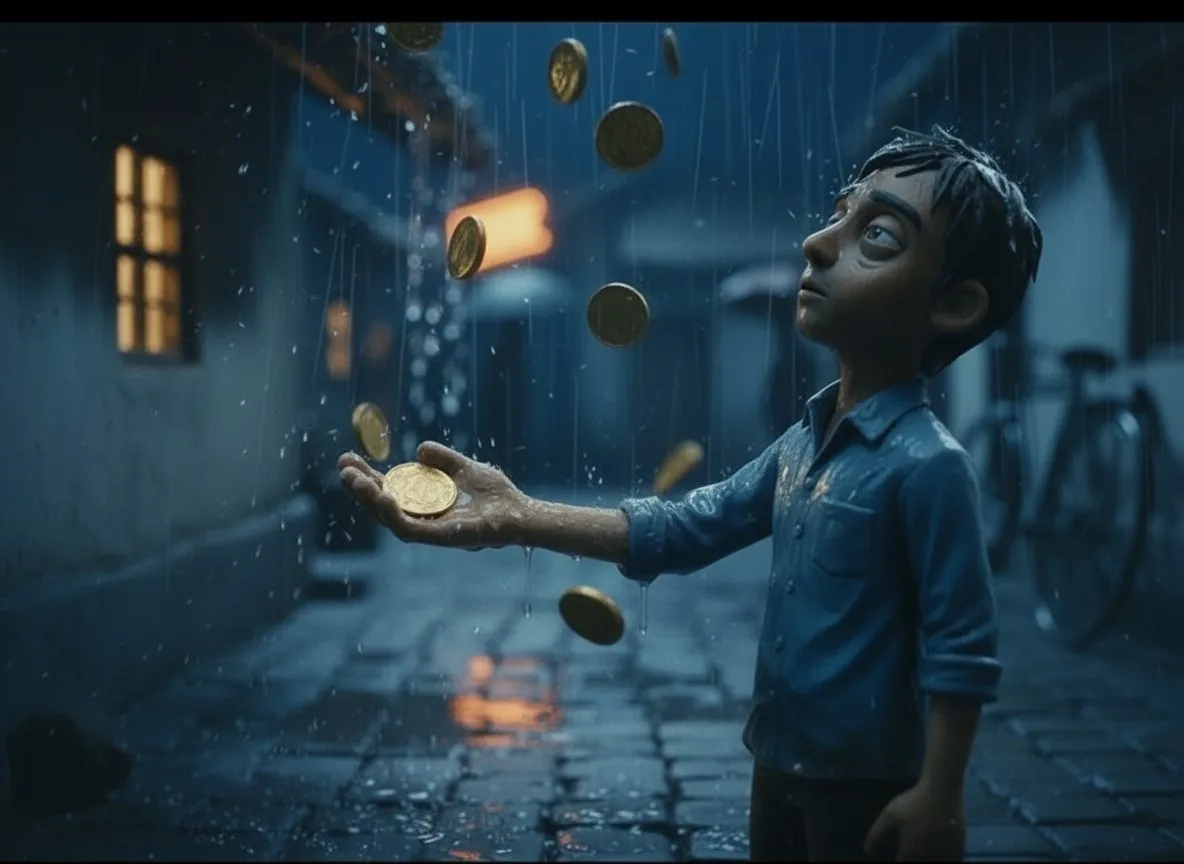
Selling the rain. -
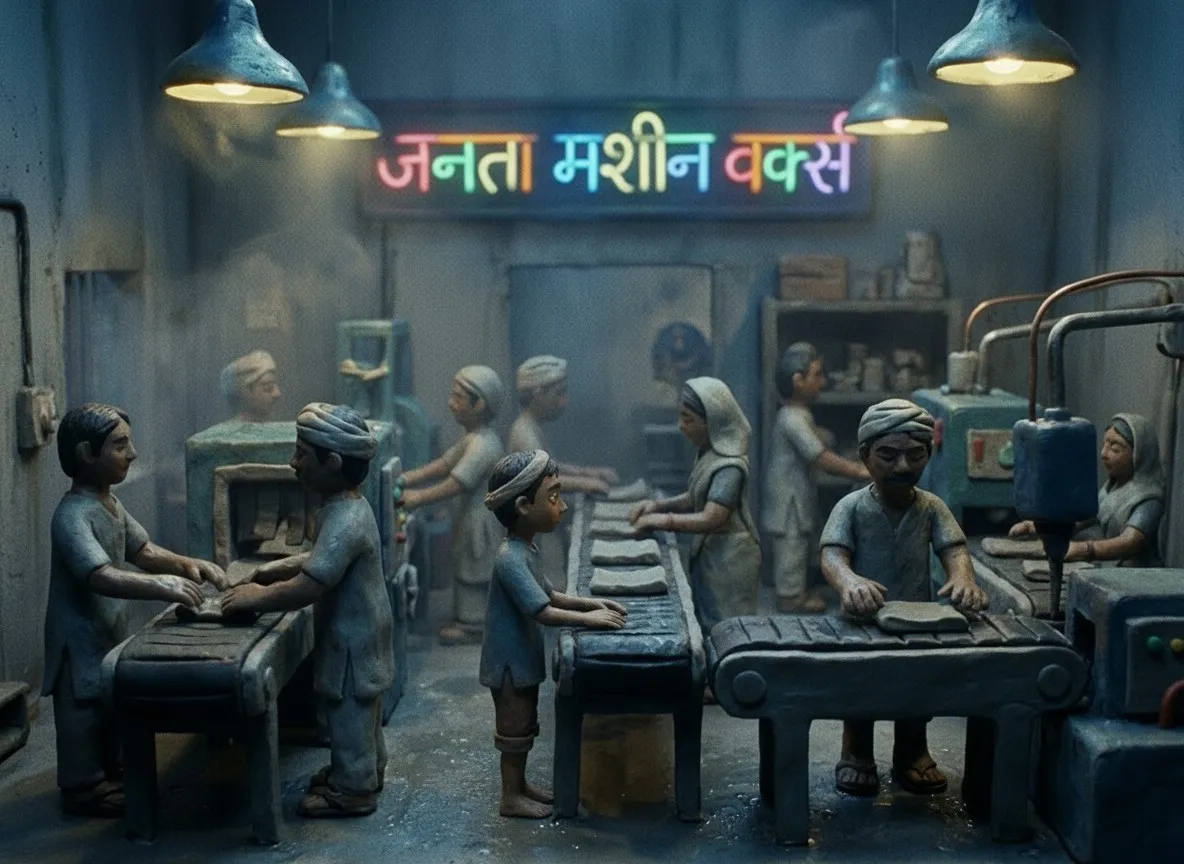
Janta Machine Works. -
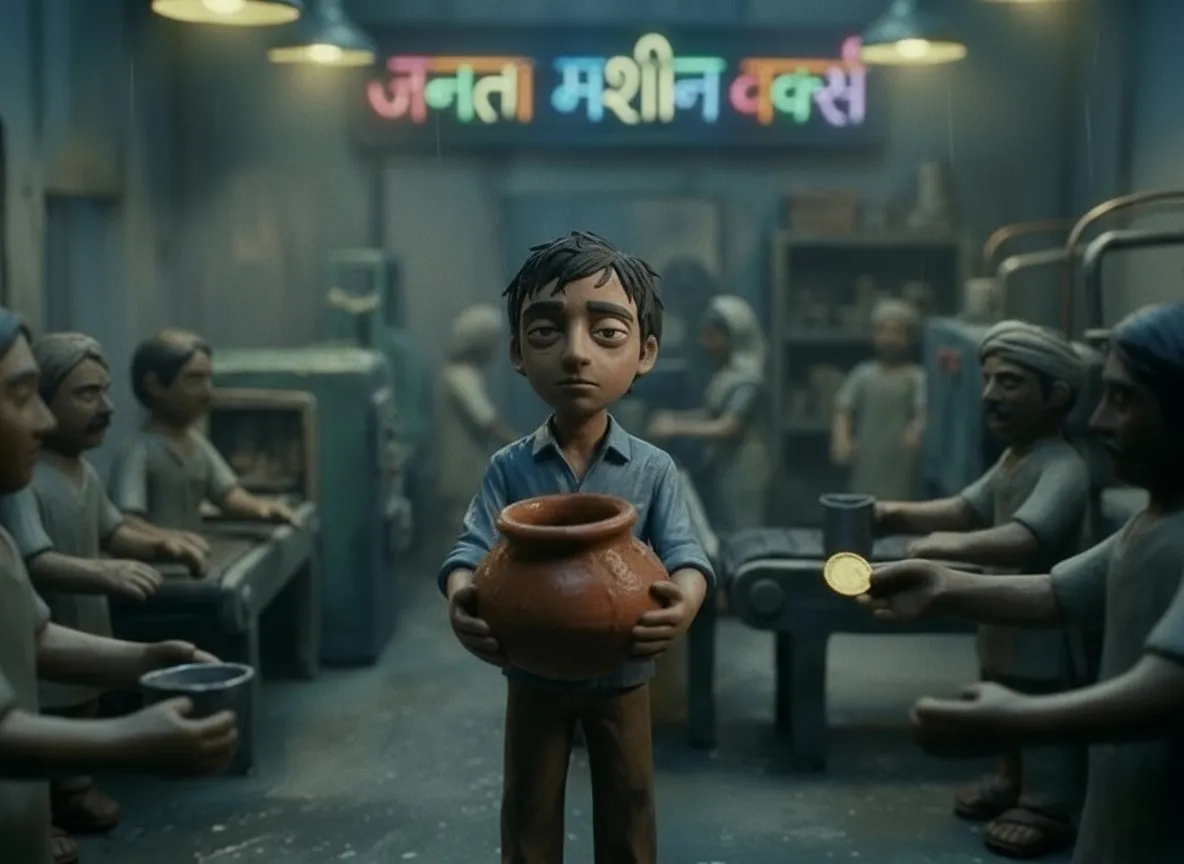
-
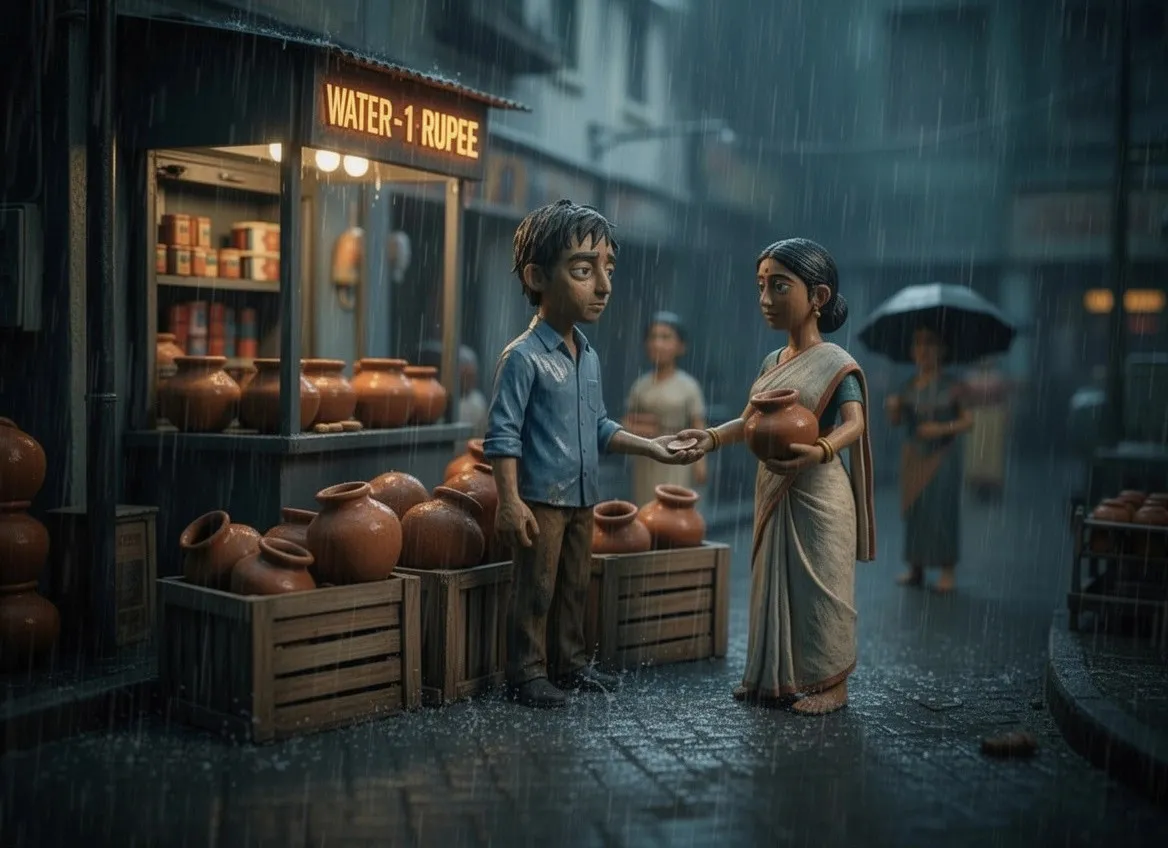
Water, one rupee. -
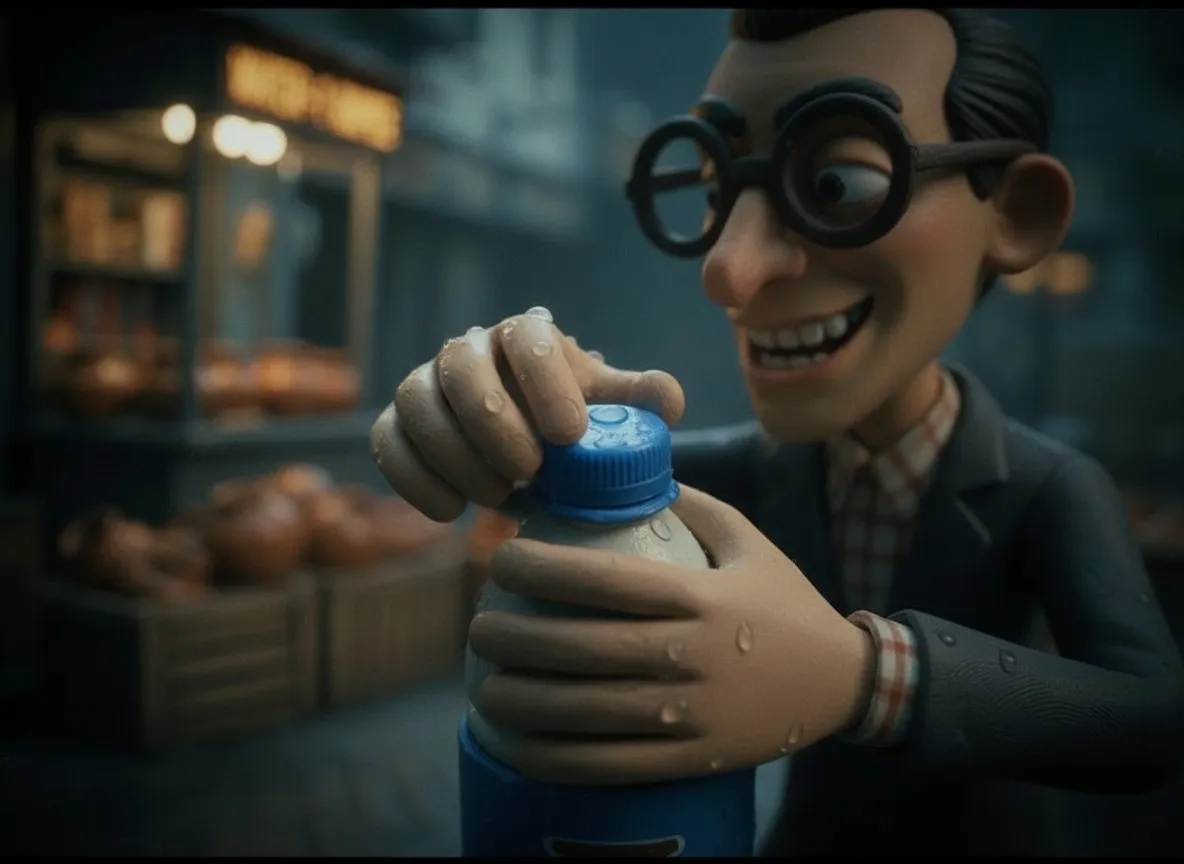
A bottle cap twisting open, the spiral again, and a supplier's offer: plastic. -
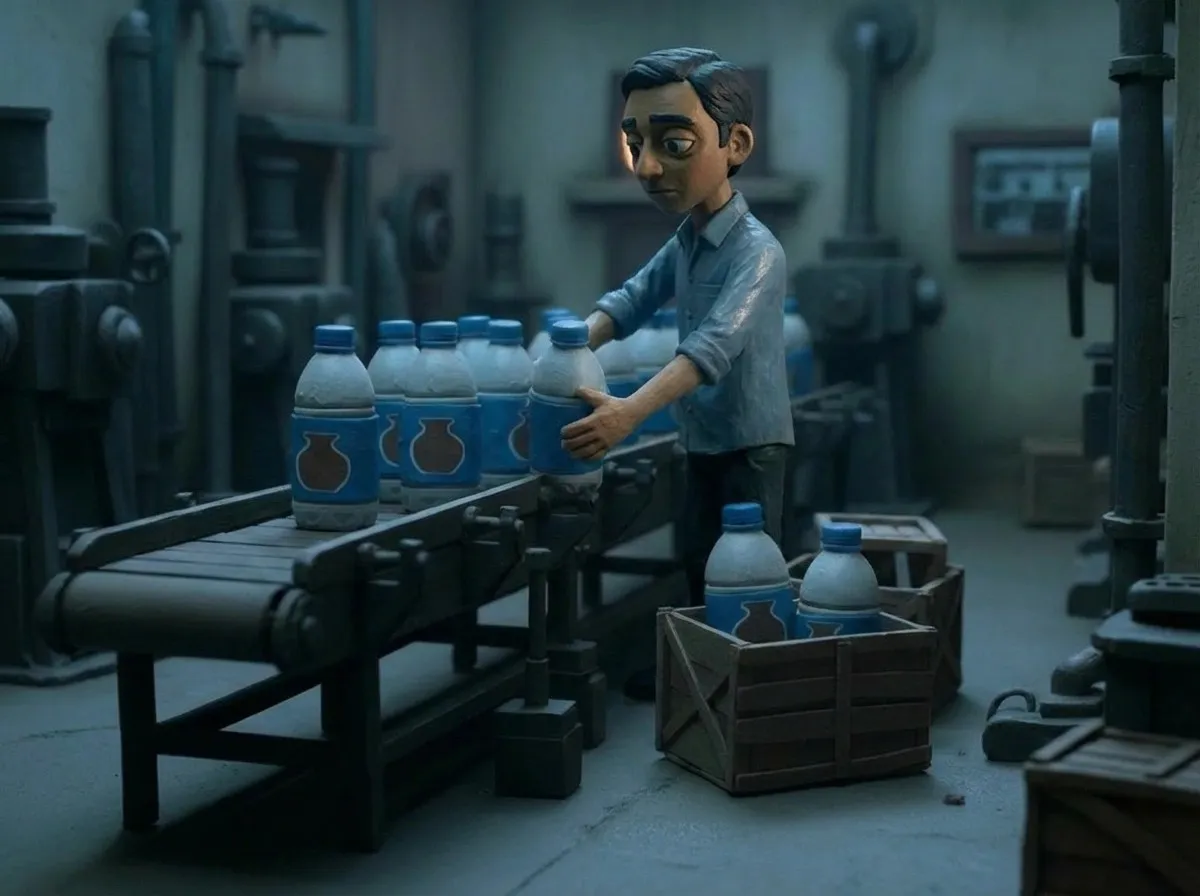
His bottles, with a clay pot on the label. -
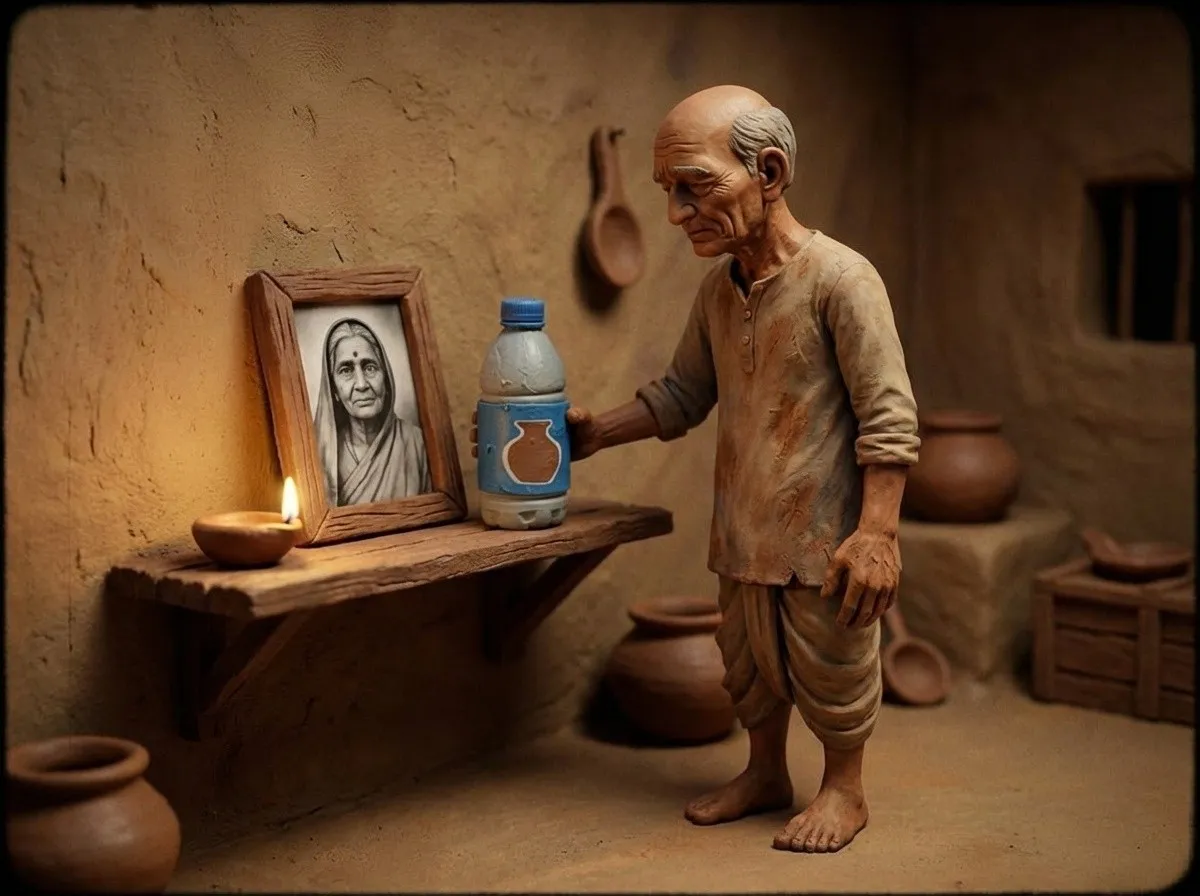
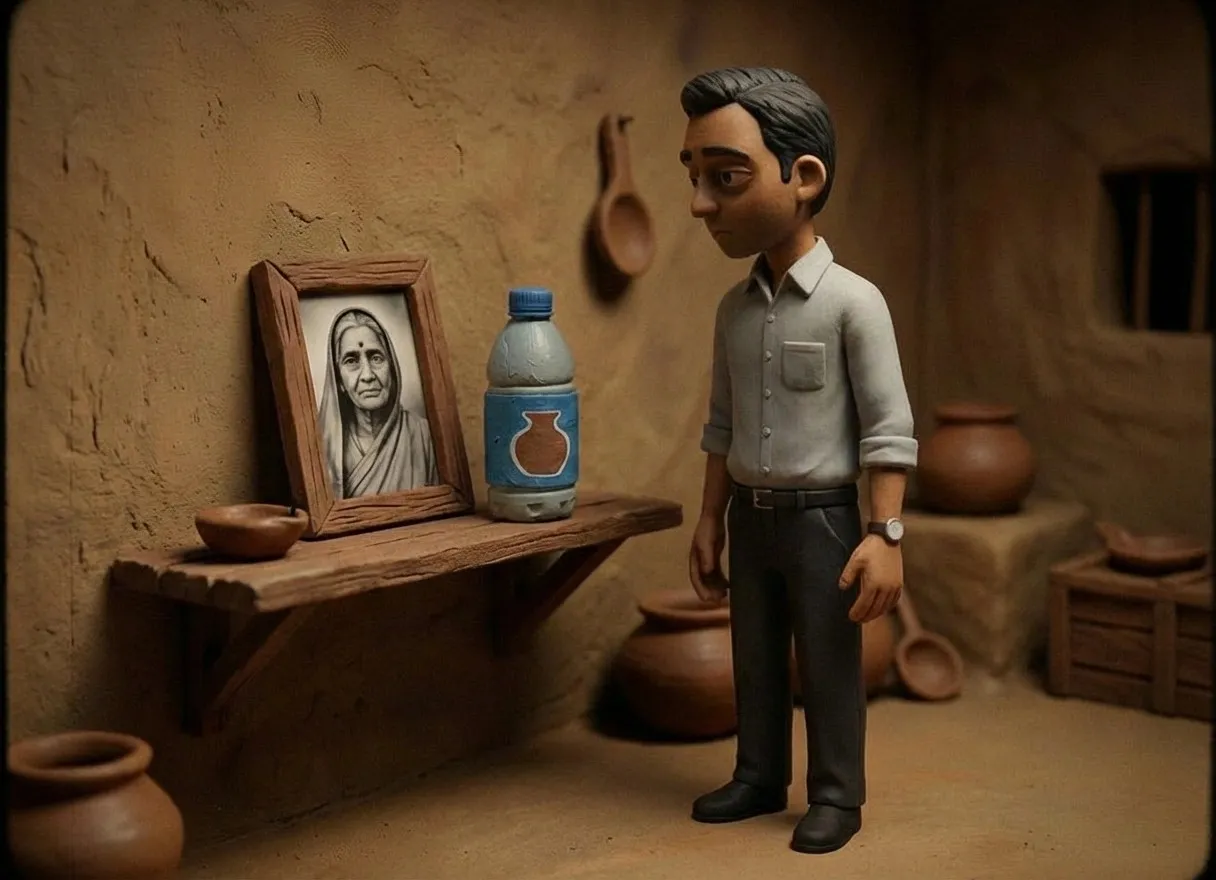
His bottles reach the village before he does. -
-
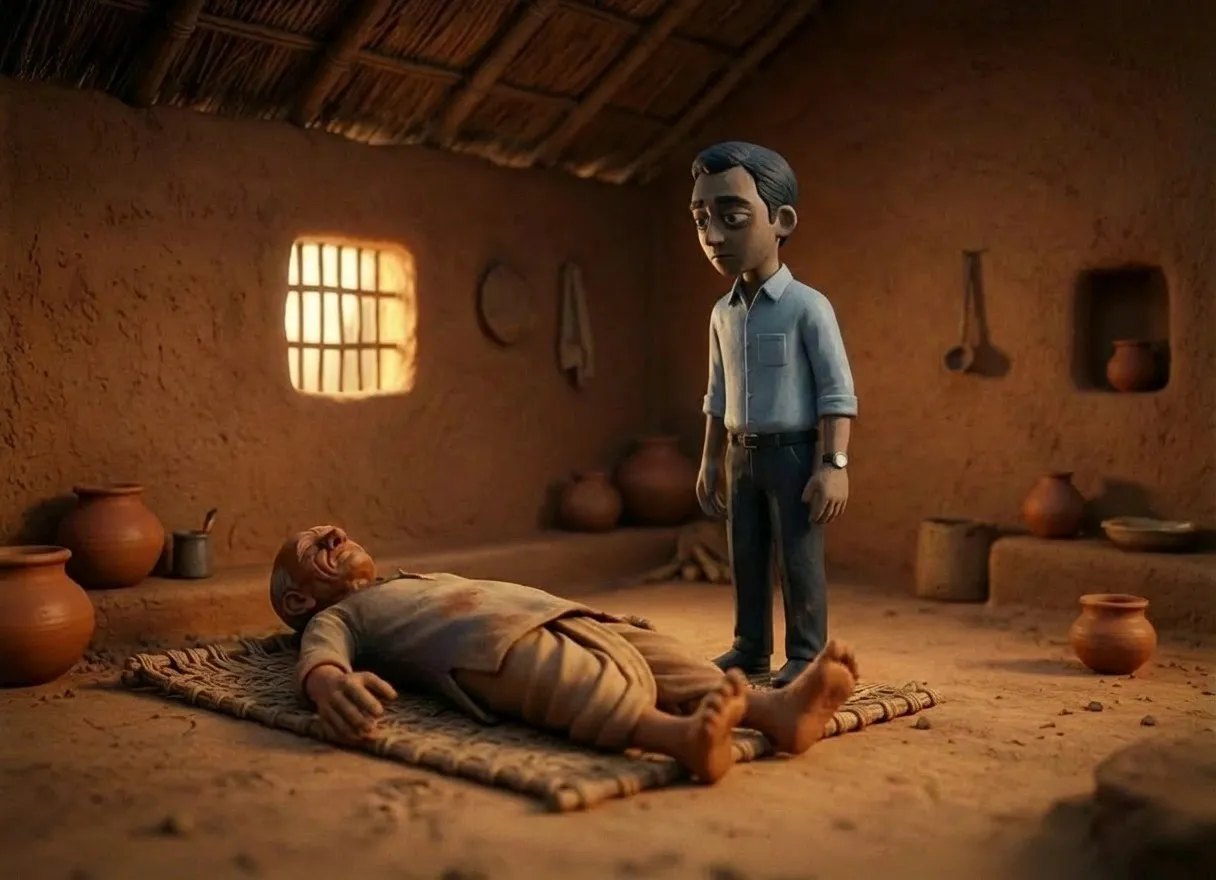
His father dies. -
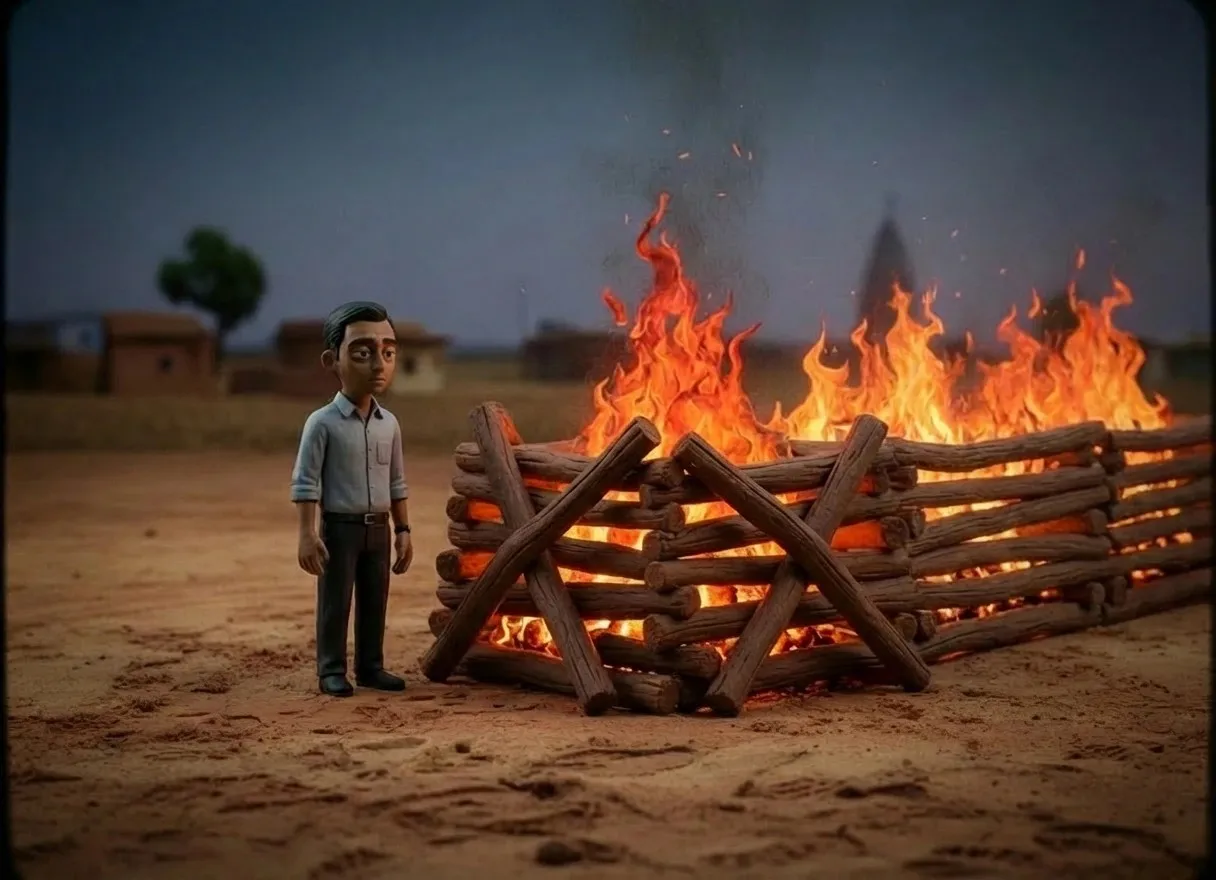
The pyre. -
-
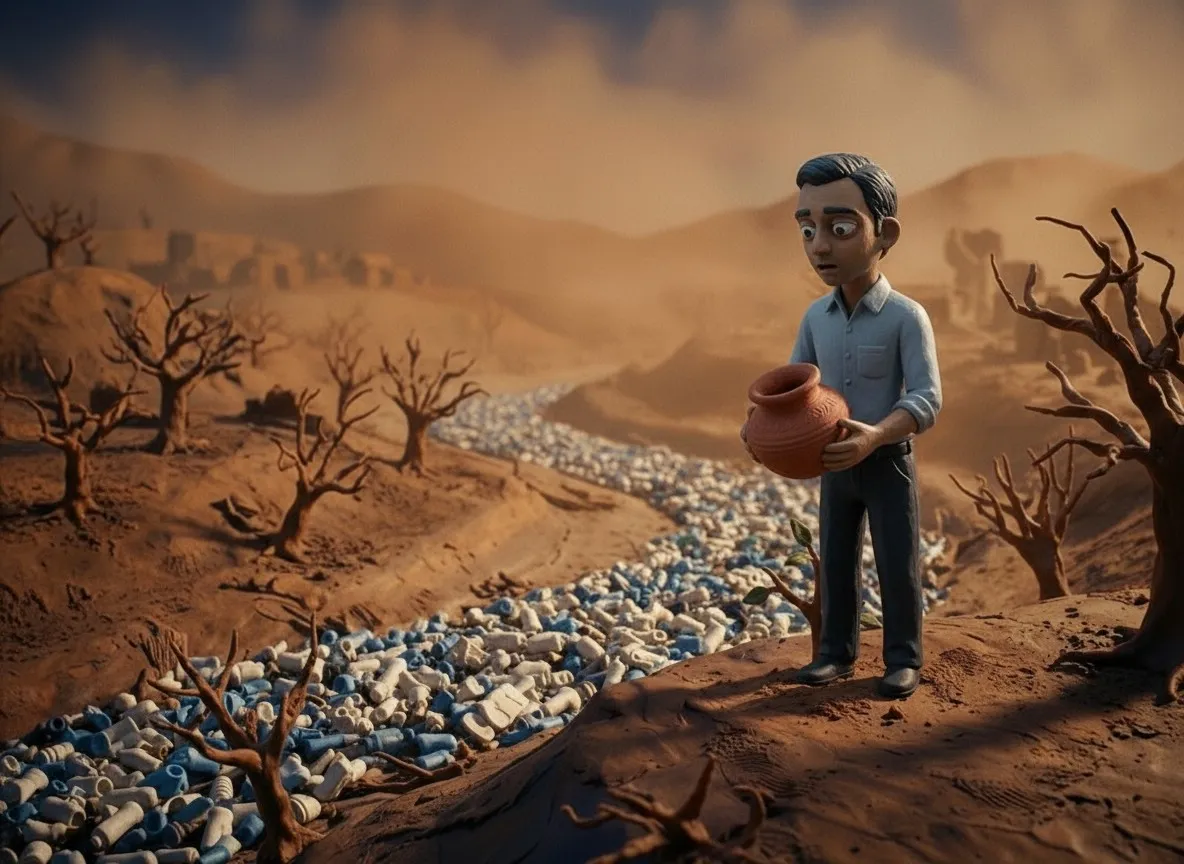
The riverbed, filled with what he sold. -
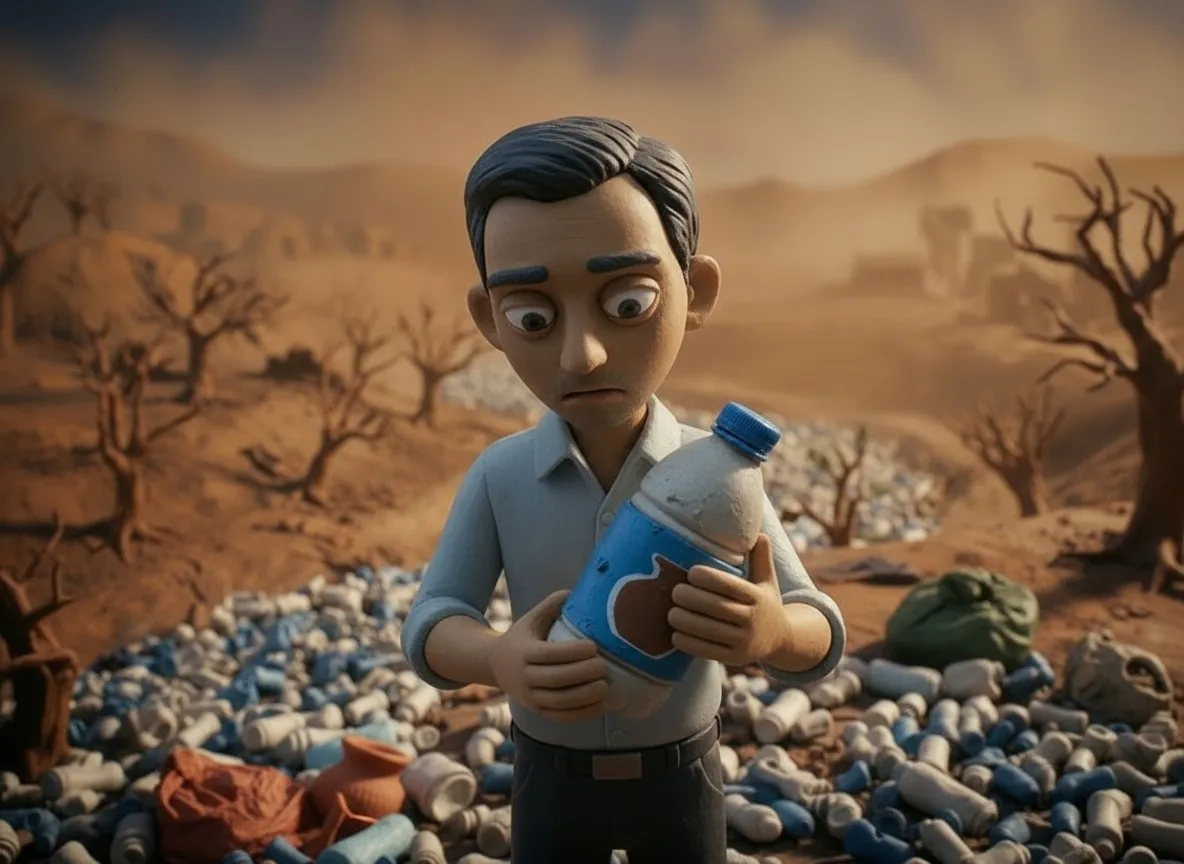
One of his own. -
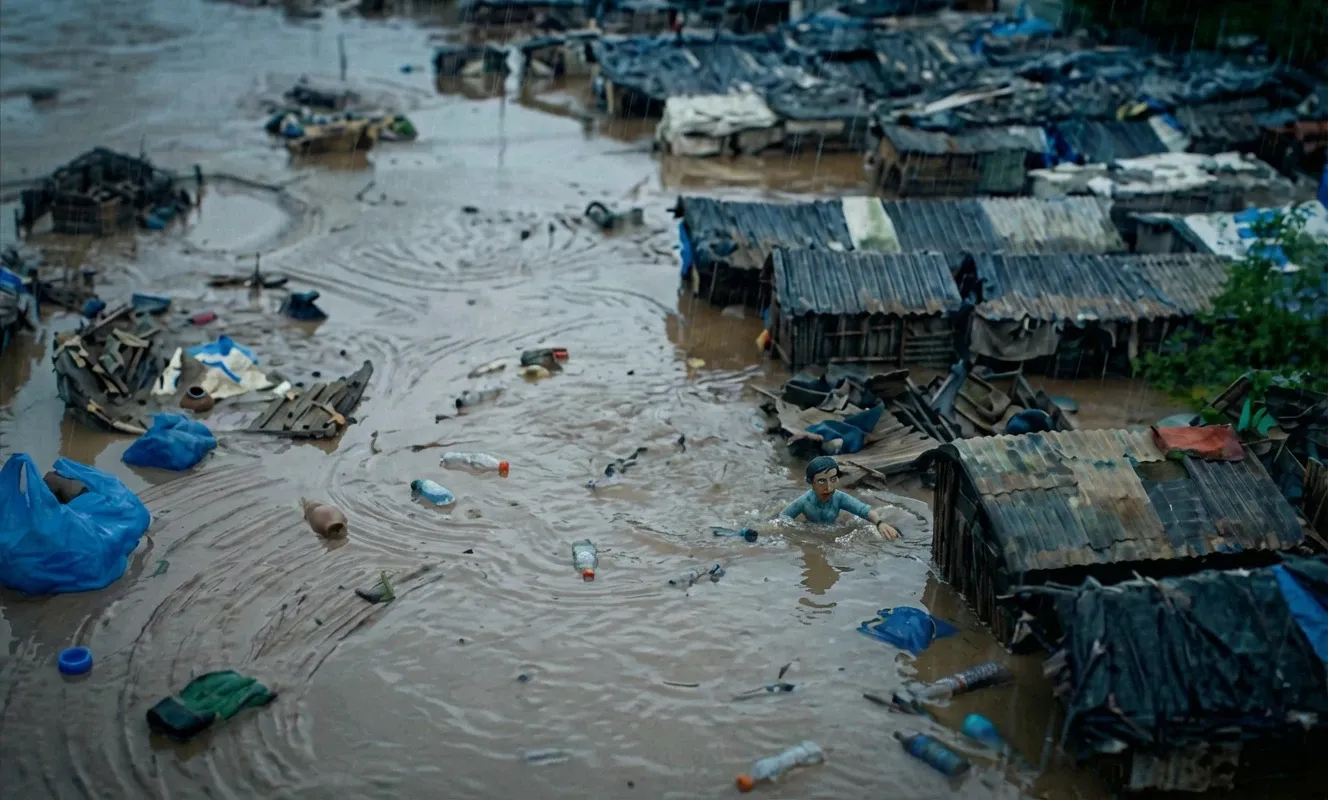
Mumbai drowns, its drains plugged solid with what he sold. -
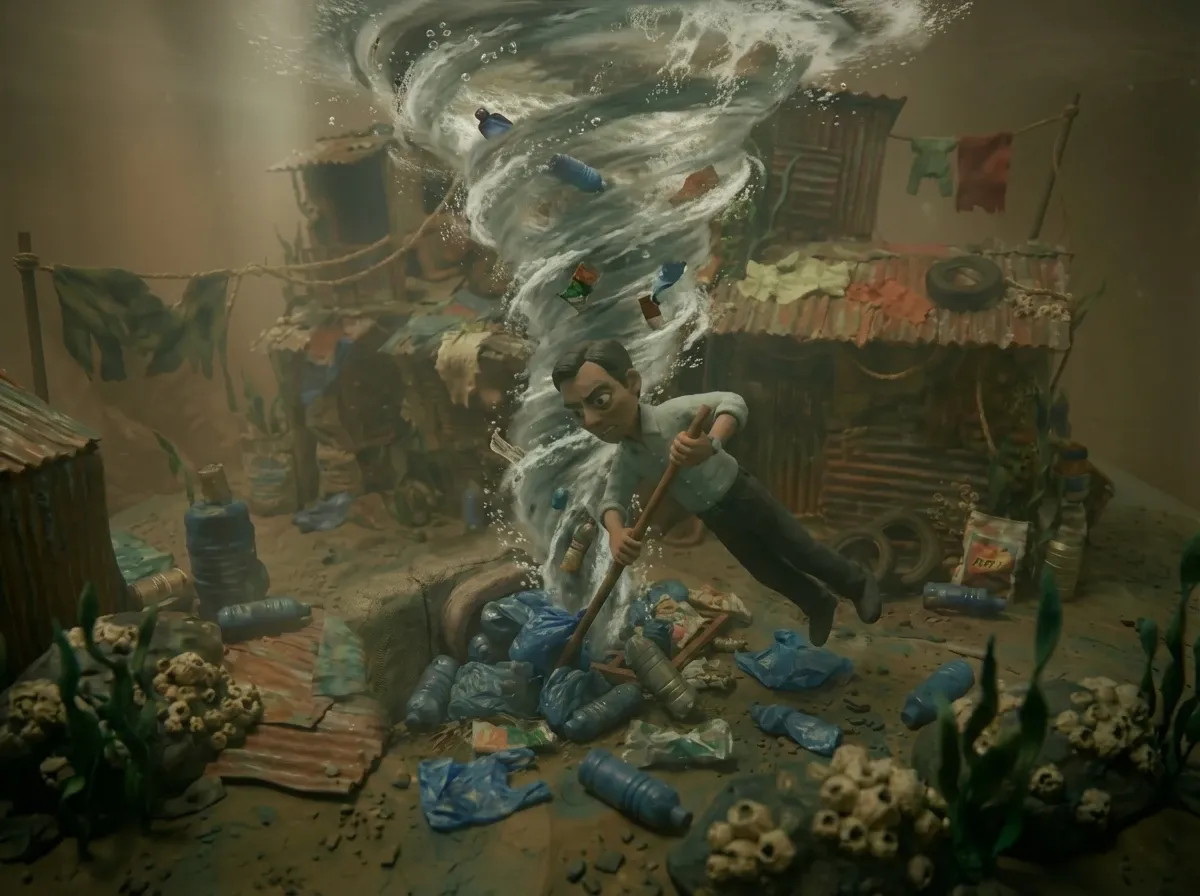
He climbs into the flood and churns it clear with a metal rod, the way his father once churned curd with a wooden one. -
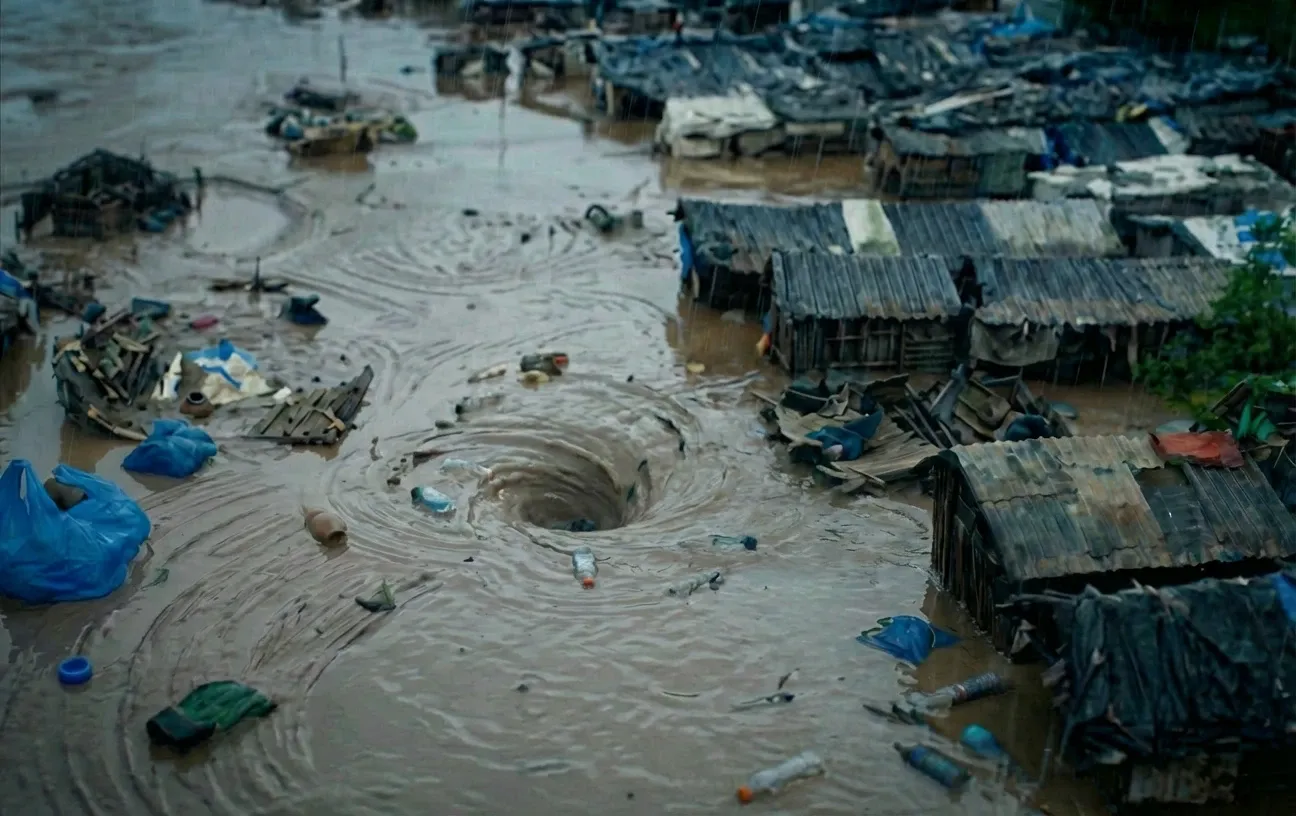
A rod spun inside a flooded drain: the last spiral. -
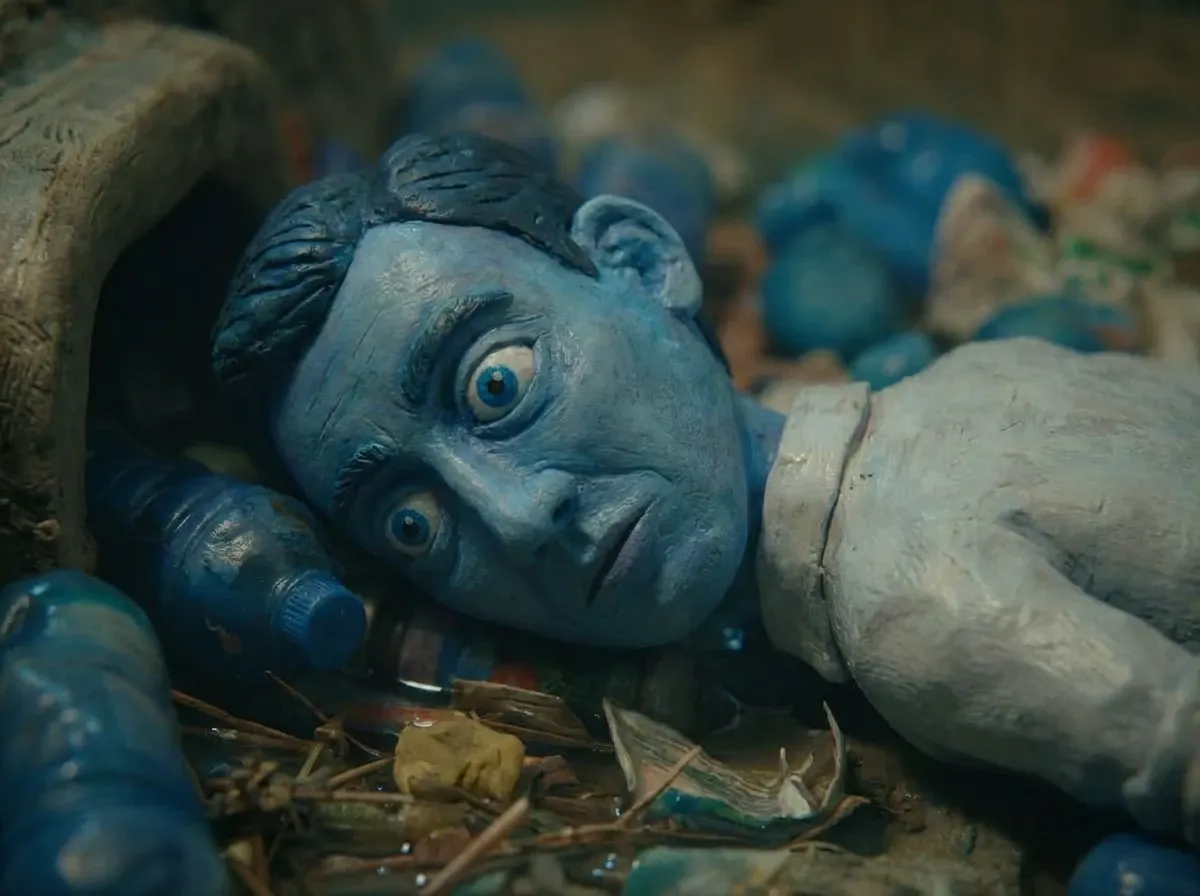
He surfaces stained blue. -
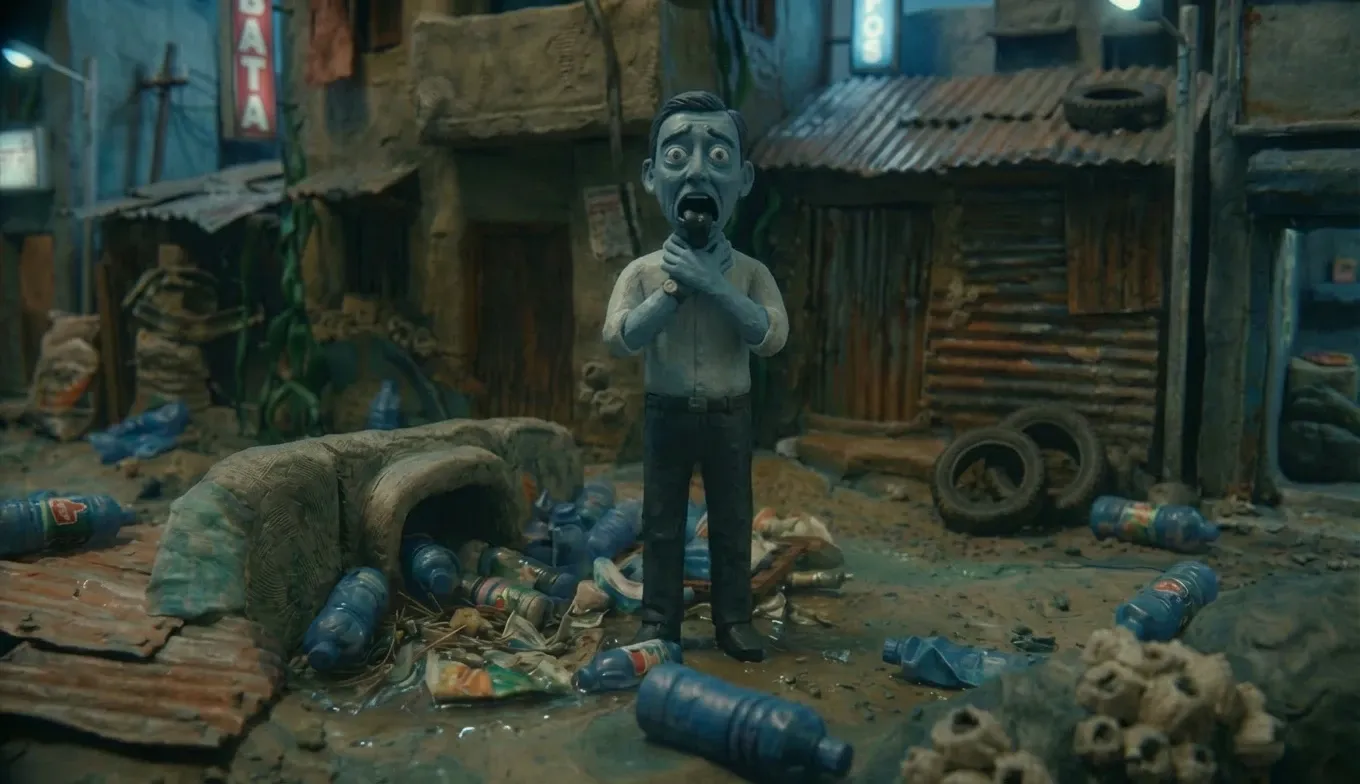
In the myth the film is named for, gods and demons churn the ocean for the nectar of immortality and raise a world-ending poison first, and someone has to hold that poison, forever, so everyone else can live.
What it is
Mid-1980s India, claymation, almost wordless. A potter’s son grows up learning clay from his father beside a river that is quietly drying. In Mumbai he discovers he can catch the monsoon in earthen pots and sell it, until a cracked shipment and a supplier’s offer hand him the thing that will actually make him rich: plastic. His bottles reach the village before he does. His father dies beside a still pottery wheel. And when Mumbai finally drowns, its drains plugged solid with what he sold, he climbs into the flood and churns it clear with a metal rod, the way his father once churned curd with a wooden one.
He surfaces stained blue. In the myth the film is named for, gods and demons churn the ocean for the nectar of immortality and raise a world-ending poison first, and someone has to hold that poison, forever, so everyone else can live.
Why plastic
Because plastic is the myth played straight: the immortality everyone wanted and the poison, for the same reason. It doesn’t rot, doesn’t decay, doesn’t die, and what can never die can never become soil again. India’s two water catastrophes (villages running dry, cities drowning in the monsoon) are tied together by this one immortal material. The film just draws the knot.
How it was made
In deliberate stages, because the first film taught me not to improvise. Research on India’s water paradox → a mood board → story drafts that each cut what the last one over-reached on → ten candidate endings tested side by side → a key-frame document with a global style bible and hard consistency rules: the son’s face locked at three ages, the father’s hands, eight recurring props, one shade of plastic blue. Then reference images, 31 key frames, 66 generated clips, Hindi voice work, a score, and the cut.
The discipline is the film. Those rules are what stop an AI film from drifting into a different film every shot. And everything painful about enforcing them by hand became the design brief for Spiral.
One motif carries the whole story: a spiral. Curd turning in a clay pot, a potter’s wheel, a bottle cap twisting open, a rod spun inside a flooded drain.