v2: the wrong machine
The specced product, built for real, and the discovery that three quarters of what people capture isn't a task.
What it looked like
-
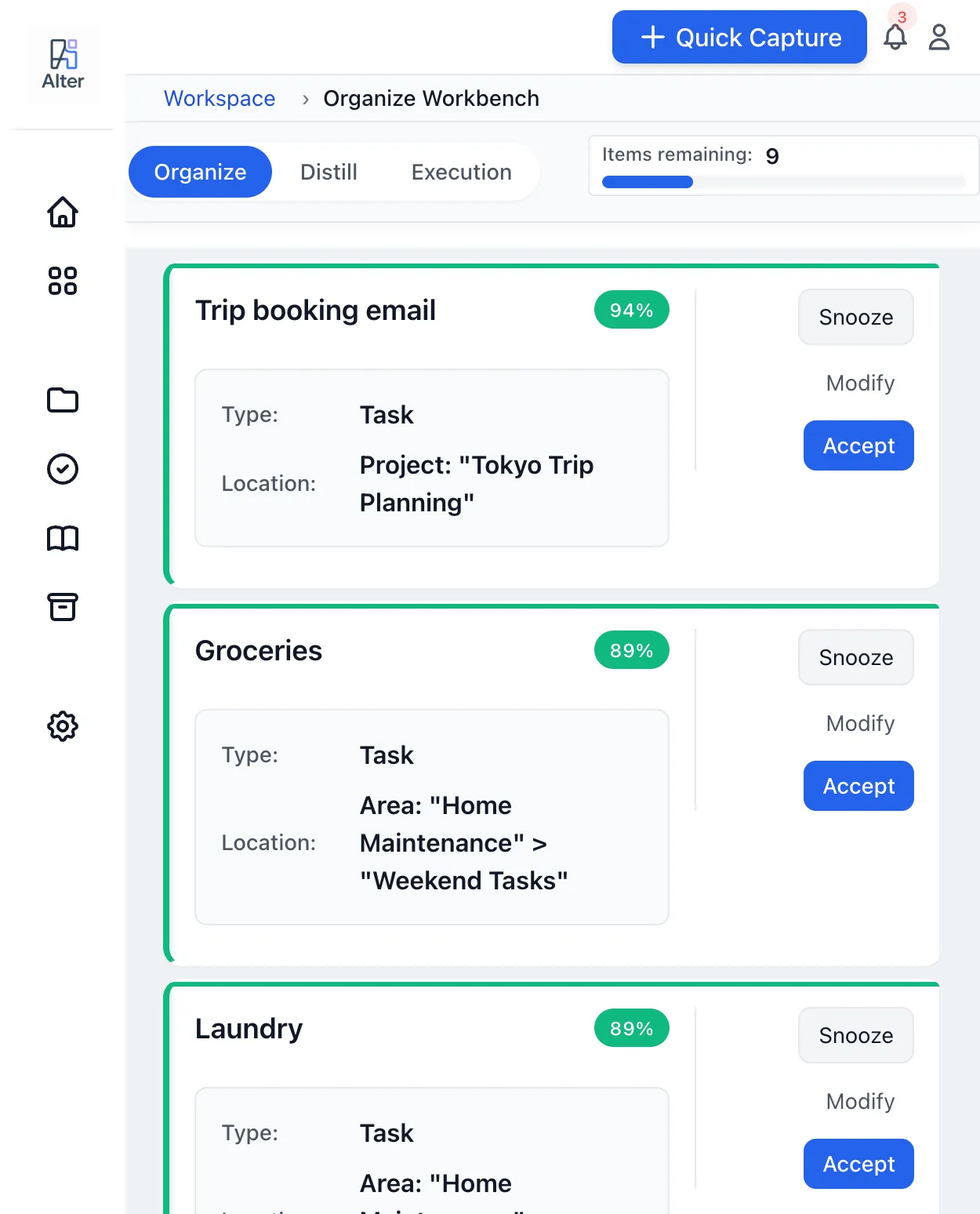
Organize: every capture triaged into a type and a location, with a confidence score. Accept, snooze, or modify. -
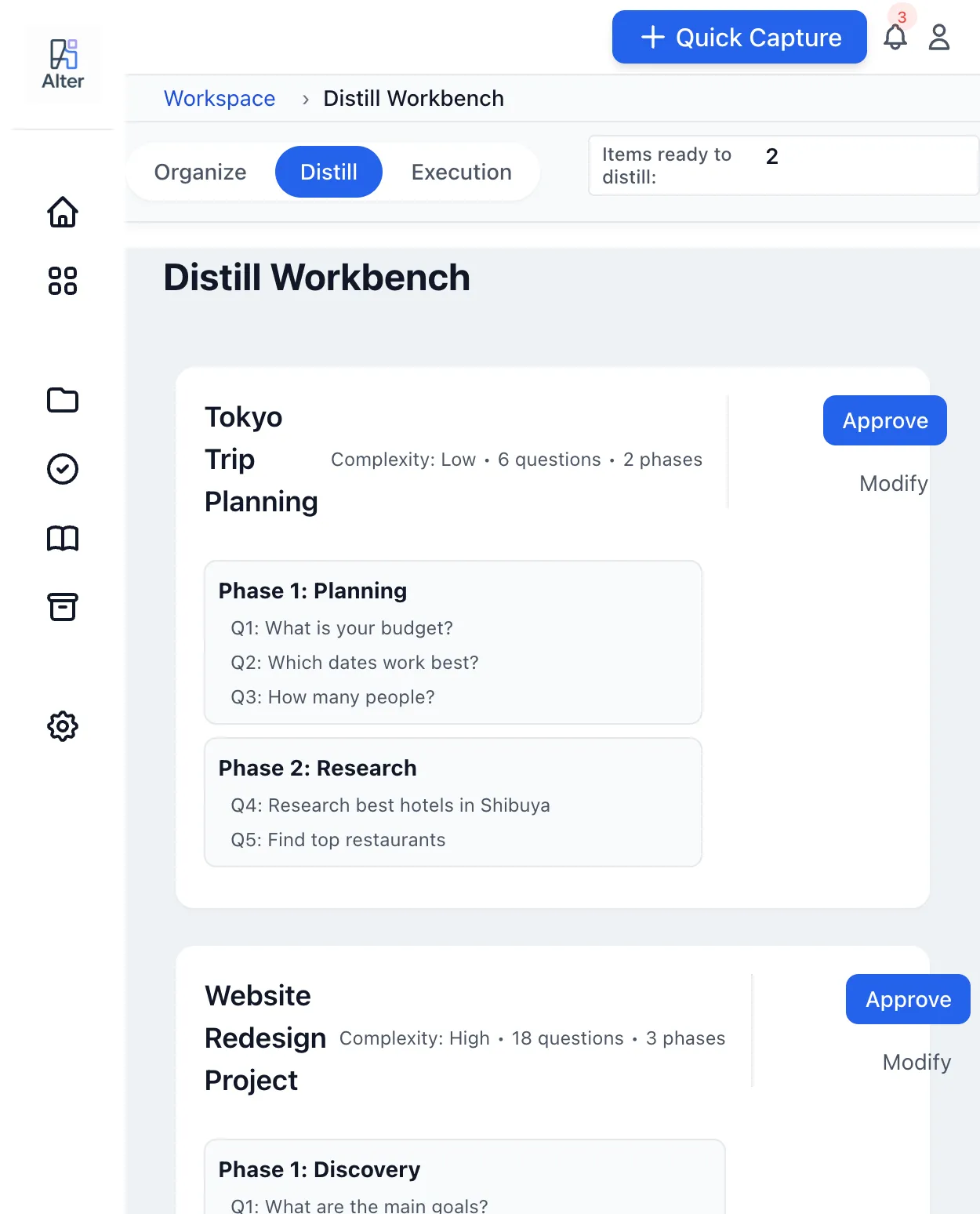
Distill: the capture interrogated into phases and questions on its way to becoming a task. -
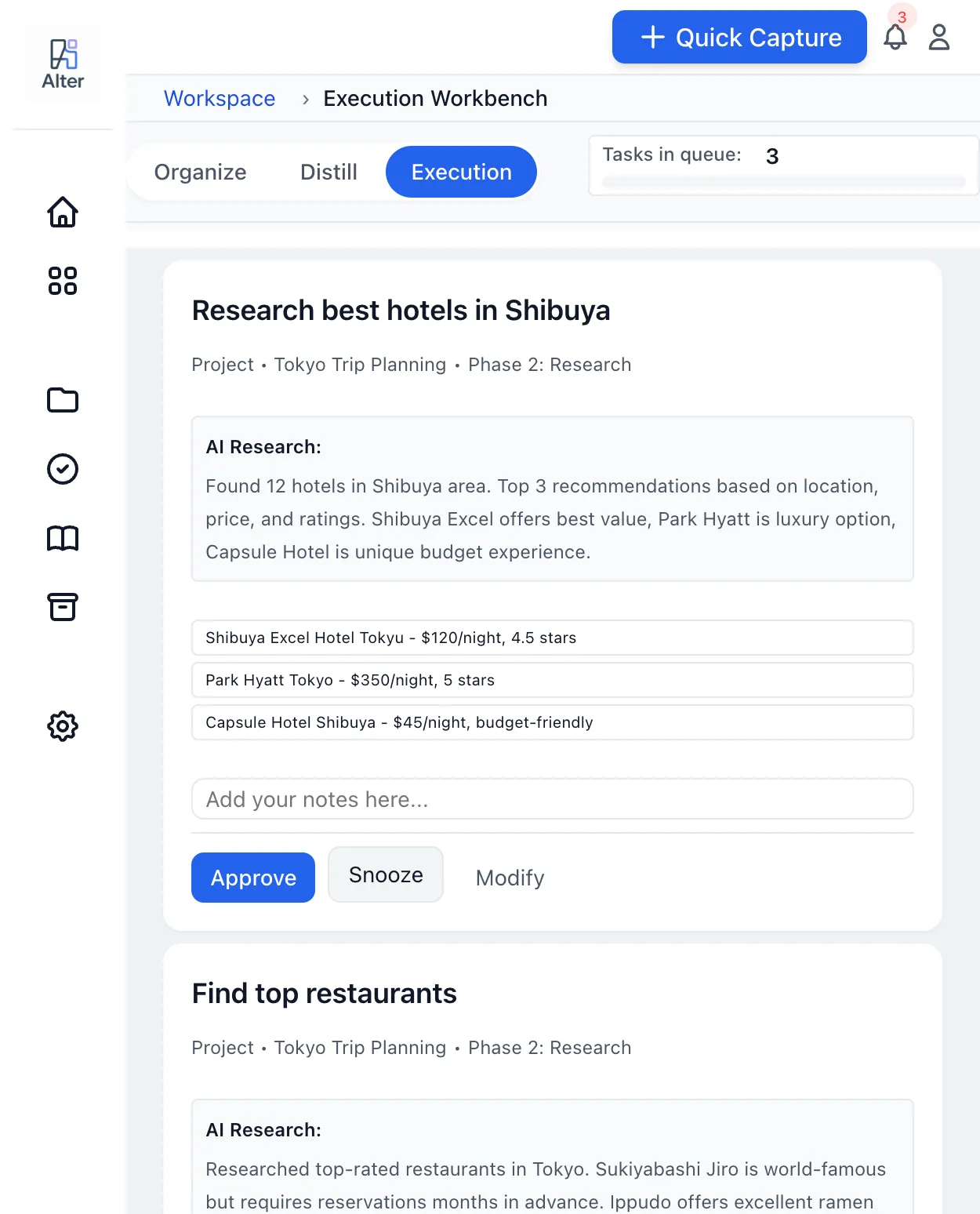
Execute: the AI does the research; you approve, or snooze. -
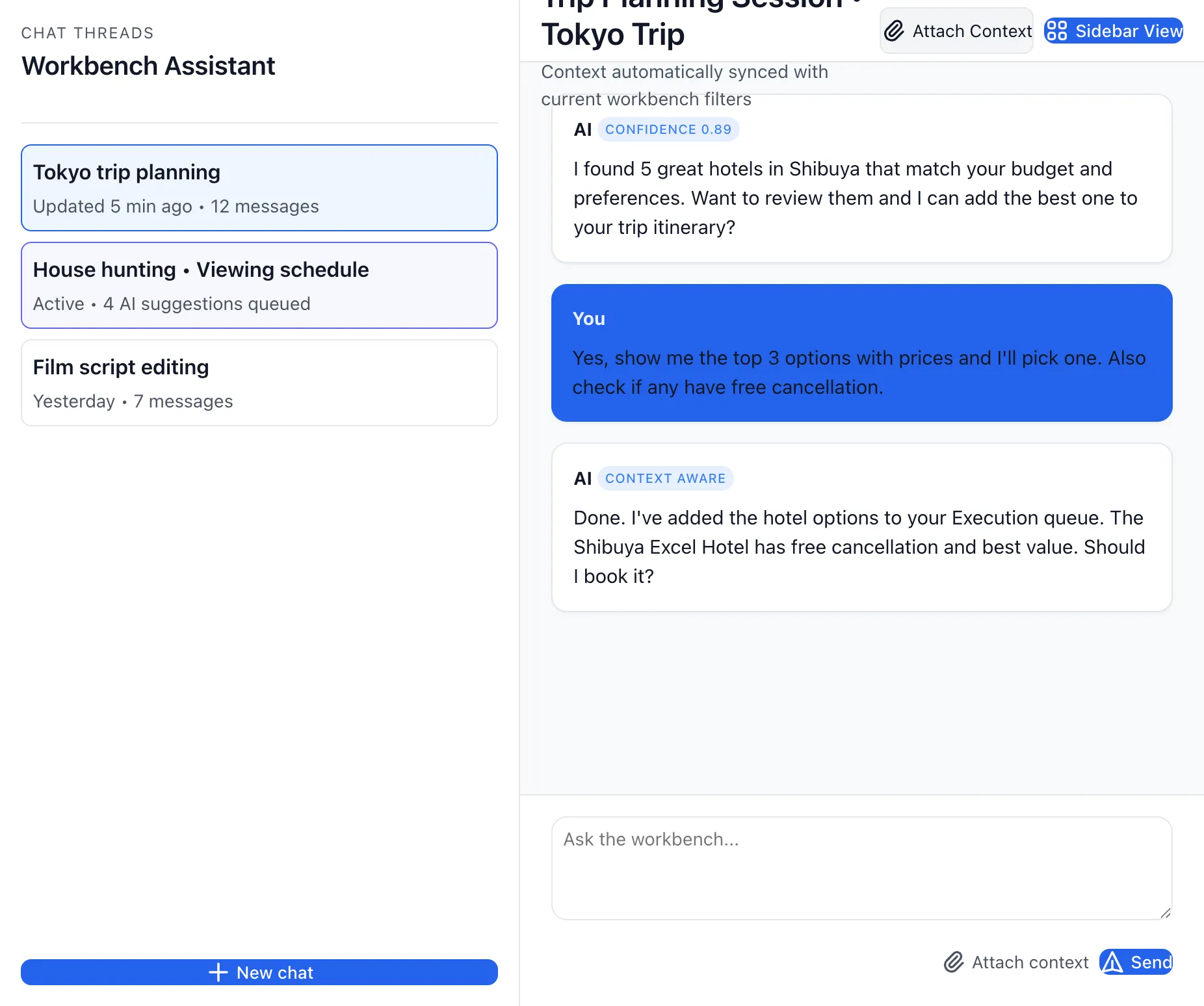
The workbench assistant: chat threads per project, context synced to whatever you were looking at. -
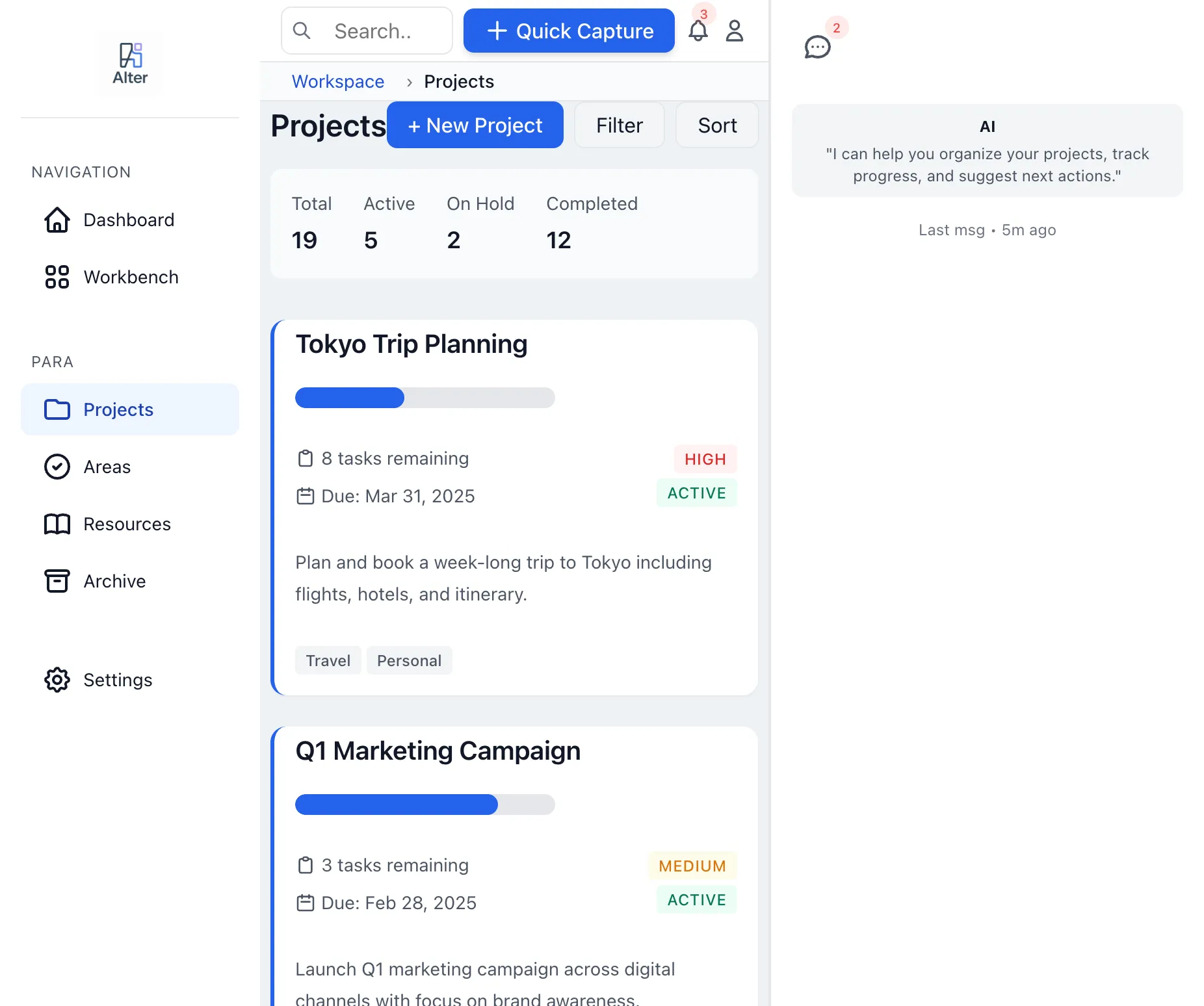
PARA as the navigation: Projects, Areas, Resources, Archive. Projects with progress, priority and due date. -
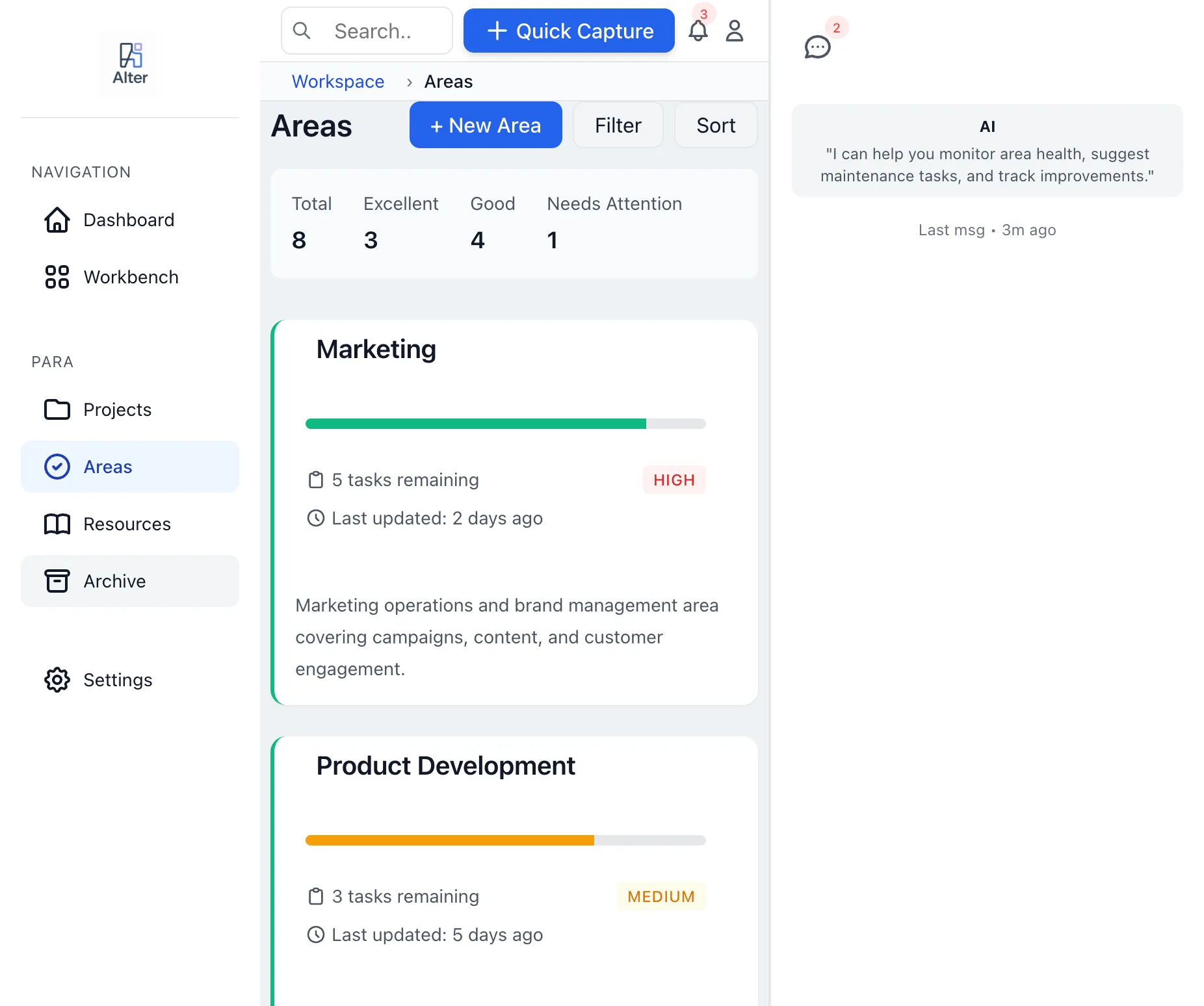
Areas, each with a health score. -
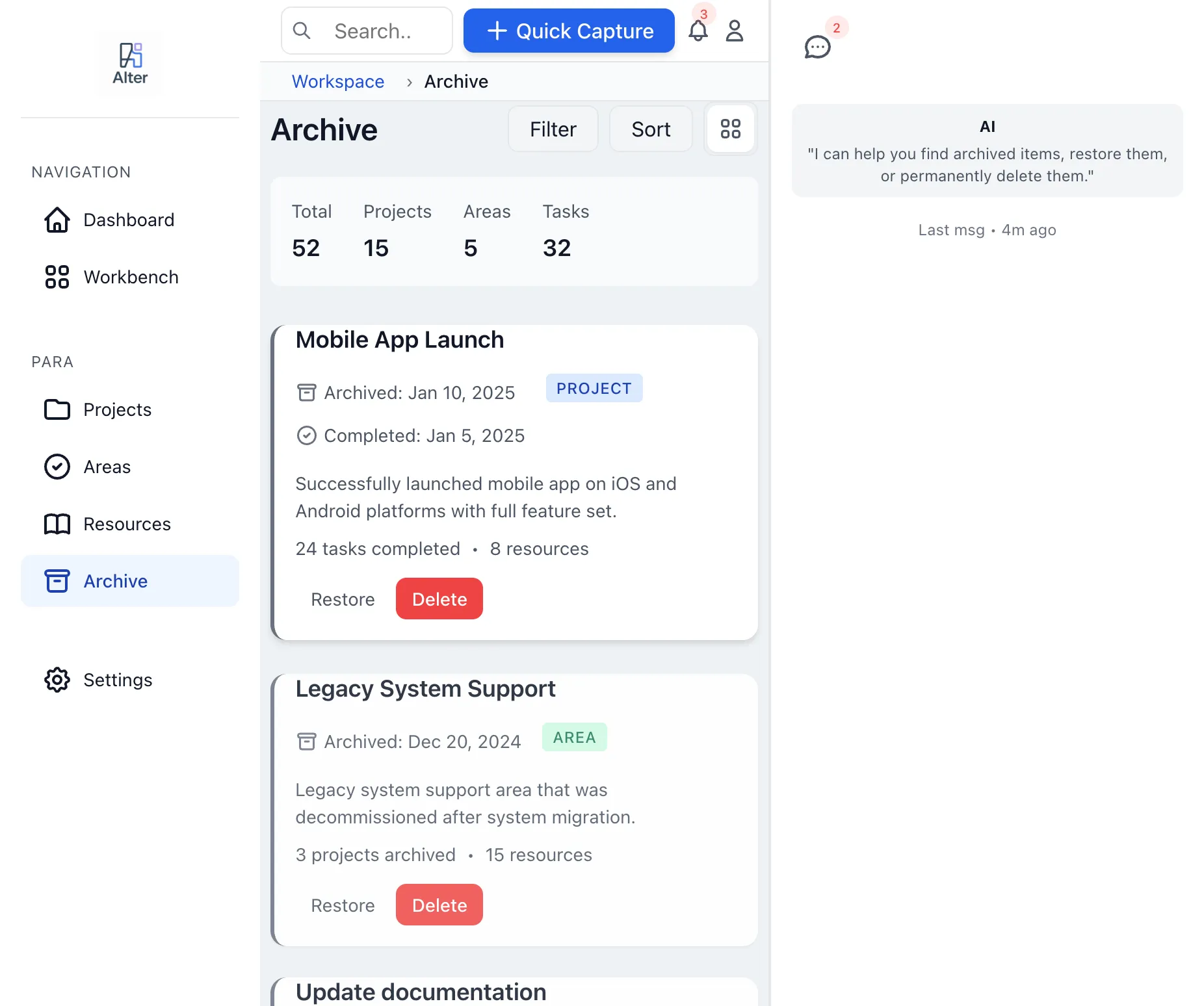
The archive. -
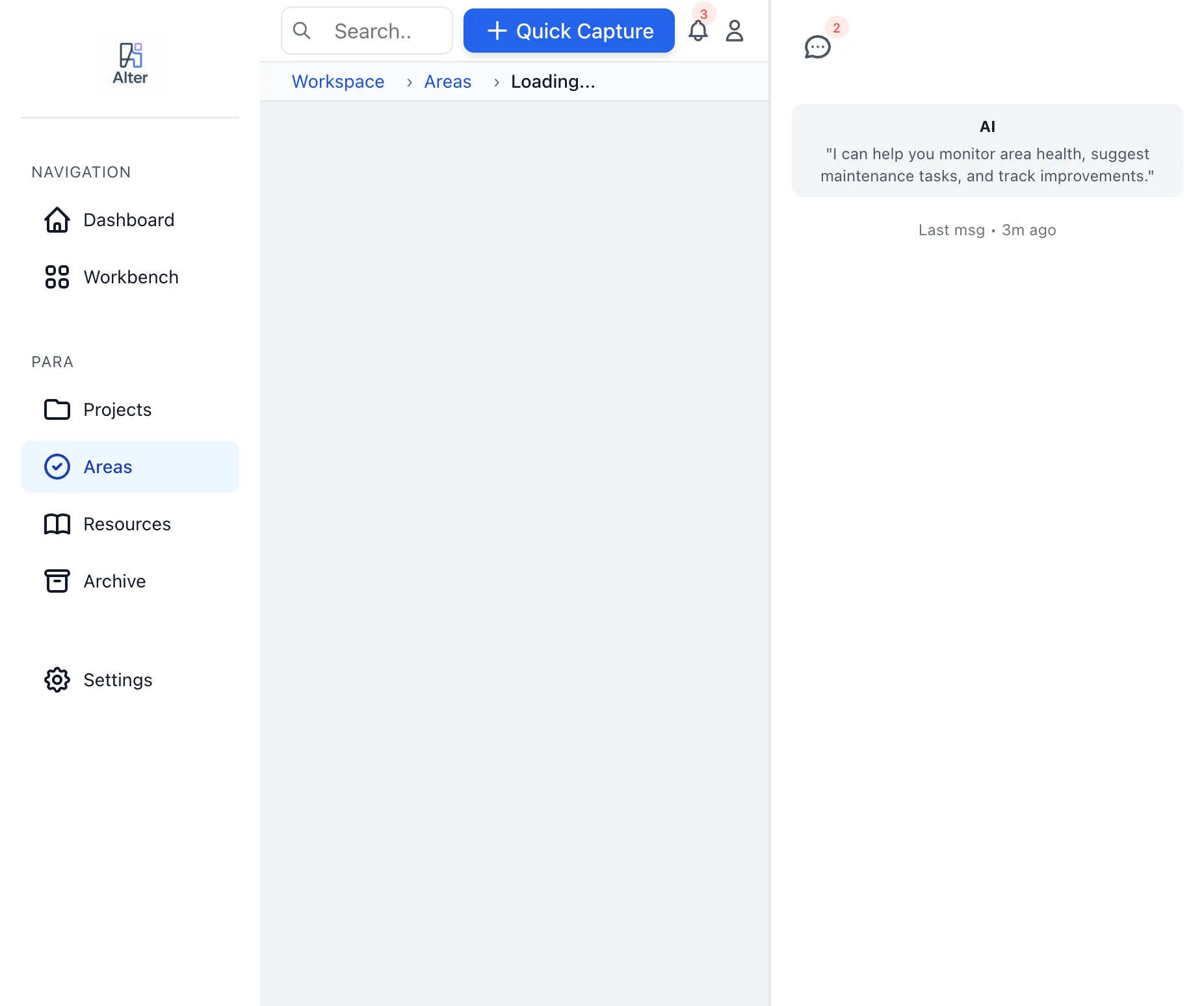
Every page had its own AI sidebar, announcing what it could do for you there. -
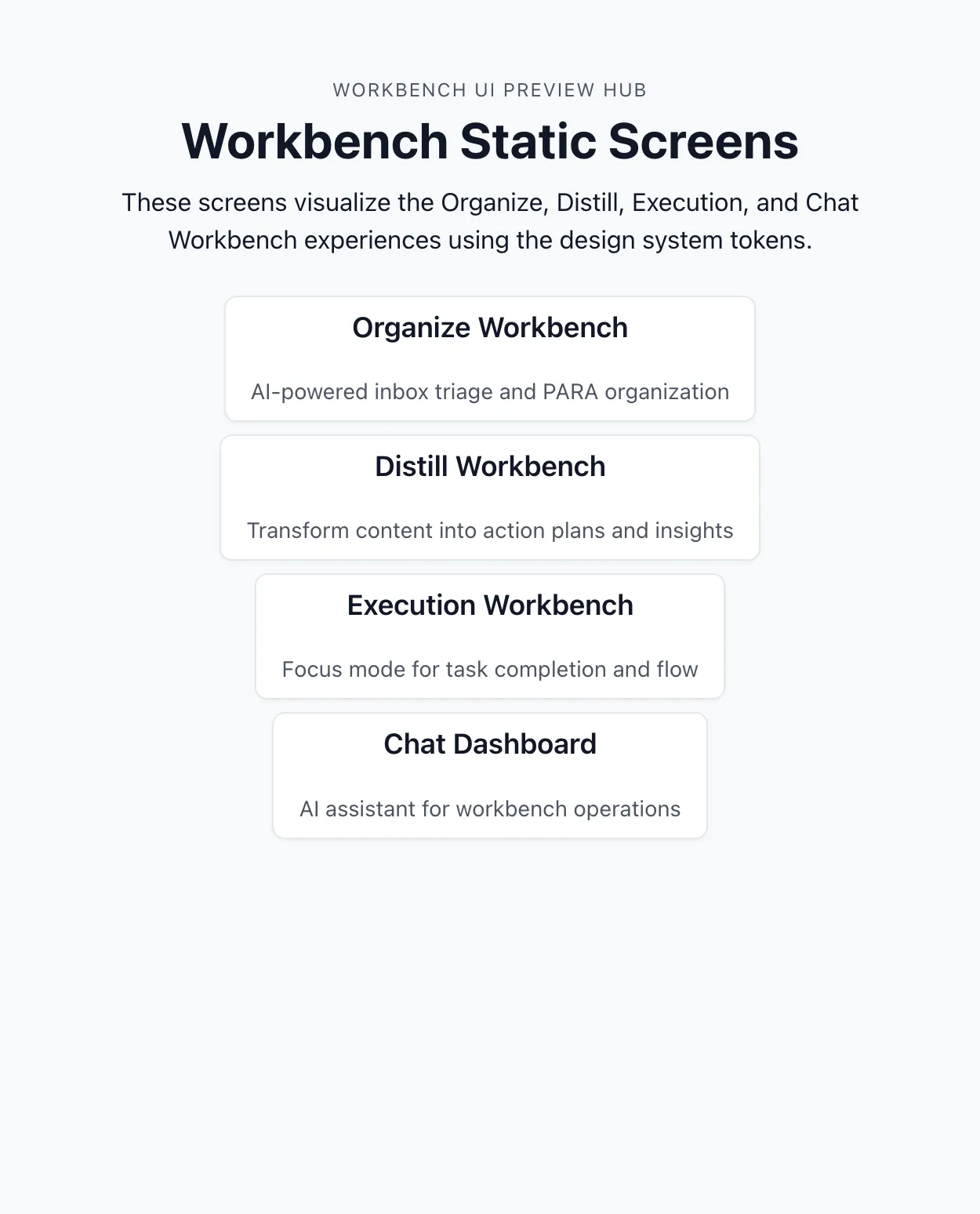
Before any of it was built: the four workbench surfaces mocked up as static screens in the design system.
v2 was the real thing at last: the specced product built properly, described from the start as a “second brain” (eleven TypeScript microservices from day one, the same service layout Alter still runs on). Features shipped steadily through the spring (filing context, semantic search, a calendar) and delivery ran on a disciplined epic → milestone → task cadence (I even trialled Google’s “Jules” coding agent for automated pull requests that December).
What it was. The CODE workbench, live: every thought you captured went through the same machine (Capture, Organize, Distill, Execute) on its way to becoming a task.
What went wrong. Reality. Using it daily surfaced the core defect: roughly three quarters of what people capture isn’t a task. A reminder isn’t a task. A reference isn’t a task. A half-thought, a decision you’re mulling, a quote you want to keep, none of them are tasks. Forcing them all through a task pipeline made the product feel rigid and interrogating, like a form you had to fill in before you were allowed to think (the design record states it plainly: “rigidity and drift”).
I first tried to rescue the machine, making the distillation step smarter and more autonomous so it would interrogate less (an orchestrator/executor agent redesign, three architecture decision records’ worth). It helped the symptom. The disease was the funnel itself.
What I decided. Stop fixing the funnel. Replace it: understand what kind of thought this is first, then send it somewhere built for that kind of thought.
Next era: The reckoning